
How Does Google Home Connect with Smart Devices in Your Home?
Quick Answer: Google Home works with smart devices through voice commands, the Google Home app, and wireless connectivity protocols like WiFi and Bluetooth. The Google Nest Hub Max 10″ Smart Display serves as our top pick for comprehensive smart home control, offering a large touchscreen interface, built-in camera for video calls, and compatibility with over 200 smart devices from 50+ brands. For budget-conscious users, the Google Nest Mini 2nd Generation at around $69 provides voice control without a display. Most Google Home compatible devices range from $18 to $229, with smart plugs starting as low as $290.10 and smart displays reaching $228.50. The key takeaway: Google Home acts as a central hub that learns your preferences, executes voice commands, and automates routines across your entire smart home ecosystem.
Google Home has evolved significantly by June 2026, becoming the backbone of millions of smart homes worldwide. The ecosystem operates on a simple principle: Google Assistant, powered by artificial intelligence, understands natural language commands and translates them into actions across connected devices. Whether you’re asking “Hey Google, turn off the lights” or setting up complex automation routines, the system works seamlessly across Google’s hardware lineup and thousands of third-party devices. Understanding how this integration works helps you build a cohesive smart home that responds to your needs without complicated manual controls.
The Google Home ecosystem has expanded dramatically, now supporting devices from major manufacturers including Philips Hue, LIFX, Nest, Ecobee, Samsung SmartThings, and countless others. This broad compatibility means you’re not locked into a single brand when building your smart home. Instead, you can mix and match devices based on features, design preferences, and budget. The system uses cloud connectivity for remote access and local network protocols for faster, more reliable in-home control. This hybrid approach ensures your smart home functions reliably whether you’re controlling devices from your couch or from thousands of miles away.
Which Google Home Smart Displays Stand Out in June 2026?
Google Nest Hub Max 10″ Smart Display with Google Assistant – Chalk

Google Nest Hub Max 10" Smart Display with Google Assistant


As an Amazon Associate we earn from qualifying purchases. Product prices and availability are accurate as of the date/time indicated.
The Google Nest Hub Max represents the premium tier of Google’s smart display lineup, featuring a generous 10-inch touchscreen that dominates your countertop or wall. This device goes beyond simple voice control by adding video calling capabilities through its integrated camera and speaker system. The larger screen real estate makes viewing recipes, weather forecasts, YouTube videos, and security camera feeds significantly more practical than smaller displays. The device includes gesture recognition technology that lets you pause videos or control playback with hand motions, adding an intuitive layer of interaction.
What makes the Nest Hub Max exceptional for smart home control is its ability to function as a proper hub device. It maintains persistent connections to your smart home network, ensuring faster response times and more reliable automation execution. The built-in speaker delivers impressive audio quality for playing music and podcasts, eliminating the need for a separate smart speaker. The device supports Google Duo video calling, allowing you to answer calls on the display or initiate video conversations with family members. For smart home enthusiasts who want a central command center that doubles as entertainment and communication hub, this is the most capable option available.
Best for: Users seeking a premium all-in-one smart home control center with video calling, entertainment streaming, and large-screen visibility. Pros: Large 10-inch display, integrated camera for video calls, excellent speaker quality, gesture recognition, hub functionality for faster smart home response. Cons: Premium pricing limits accessibility for budget-conscious buyers; requires wall space or counter real estate; camera raises privacy considerations for some users.
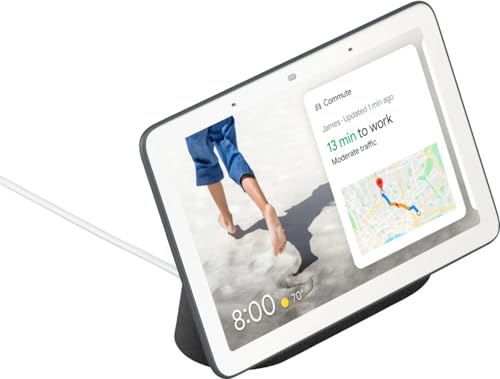
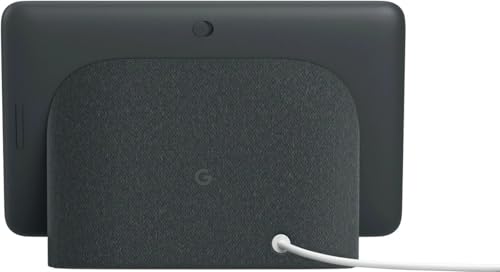
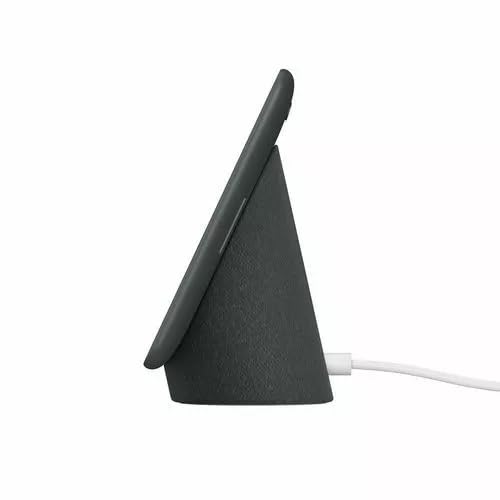
Google Nest Hub (1st Gen) 7″ Smart Display with Google Assistant – Charcoal

Google Nest Hub 7" Smart Display - Voice Control & Home Integration

As an Amazon Associate we earn from qualifying purchases. Product prices and availability are accurate as of the date/time indicated.
The Google Nest Hub (1st Generation) offers an excellent middle ground between voice-only speakers and premium smart displays. The 7-inch touchscreen provides enough space for viewing weather, calendar events, YouTube videos, and Google Photos without overwhelming smaller rooms or kitchen counters. The 1024×600 resolution display delivers clear visuals for everyday tasks, though it doesn’t match the crispness of higher-resolution newer models. This device excels at smart home control, supporting over 200 compatible devices from 50+ brands, making it one of the most versatile hubs for multi-brand smart home setups.
The Nest Hub’s Voice Match technology personalizes the experience by recognizing individual voices and displaying custom reminders, calendar events, and routines. This feature proves invaluable in households with multiple users, as each person gets their own tailored information without manual switching. The device includes a night light feature that gradually brightens in the morning and dims in the evening, supporting natural sleep cycles. The compact form factor fits comfortably on nightstands, kitchen counters, or shelves without dominating the space. At check current price, this represents a significant value proposition for users wanting smart home control with visual feedback without spending premium prices.
Best for: Budget-conscious smart home enthusiasts wanting a display-based hub with broad device compatibility and personalized voice features. Pros: Affordable pricing around check current price, excellent compatibility with 200+ devices, Voice Match personalization, compact 7-inch form factor, supports multiple users. Cons: First-generation hardware lacks advanced features like sleep tracking; lower resolution compared to newer models; no camera for video calls; no Bluetooth audio output; requires strong WiFi connection.
Which Google Home Smart Speakers Deliver Best Voice Control?
Google Nest Mini 2nd Generation Smart Speaker with Google Assistant – Charcoal
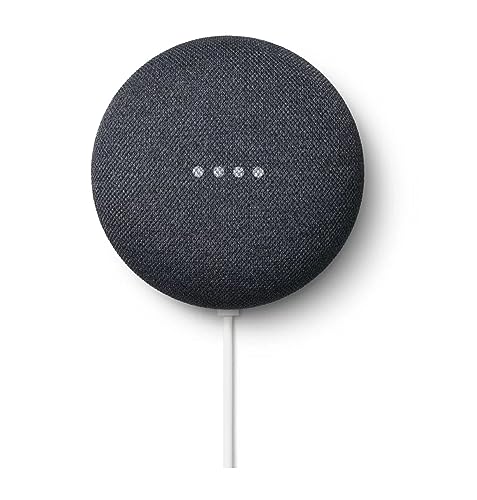
Google Nest Mini 2nd Gen Smart Speaker - Compact Voice Control


As an Amazon Associate we earn from qualifying purchases. Product prices and availability are accurate as of the date/time indicated.
The Google Nest Mini 2nd Generation represents Google’s most accessible entry point into smart home voice control. This compact speaker measures just 4 inches across, making it unobtrusive enough for bedroom nightstands, office desks, kitchen counters, or living room shelves. Don’t let the small size fool you—the speaker delivers surprisingly robust sound quality for its class, with bright, clear audio suitable for music playback and voice assistant interactions. The device includes a built-in wall mount option, allowing installation directly on walls to save counter space.
What makes the Nest Mini particularly valuable for smart home control is its ability to serve as a local hub device in some configurations, enabling faster response times for connected devices. The speaker recognizes voice commands with impressive accuracy, understanding natural language variations of the same request. The device supports multi-language operation, making it ideal for bilingual households. The global AC adapter included in the bundle works internationally, so the Nest Mini functions in outlets worldwide. At approximately $69, this speaker offers exceptional value for users who want voice-controlled smart home automation without investing in a display or premium hardware.
Best for: Users seeking affordable voice-controlled smart home access without display functionality, including renters and those with space constraints. Pros: Compact 4-inch design fits anywhere, excellent value at $69, good speaker quality, wall-mountable, multi-language support, global power adapter compatibility. Cons: No display means no visual feedback for information; smaller speaker limits audio quality for entertainment use; requires separate device for complex smart home visualization; hub functionality varies by configuration.
Which Smart Plugs Work Best with Google Home?
Linkind Matter Smart Plug – 2 Pack with Apple Home, Siri, Alexa, Google, SmartThings Support

Linkind Matter Smart Plug 2-Pack – Apple Home & Alexa Compatible




As an Amazon Associate we earn from qualifying purchases. Product prices and availability are accurate as of the date/time indicated.
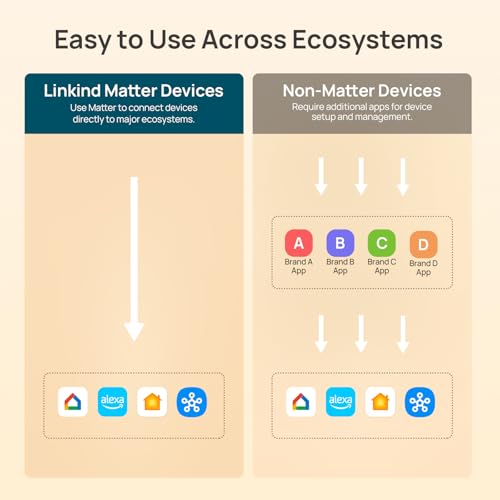
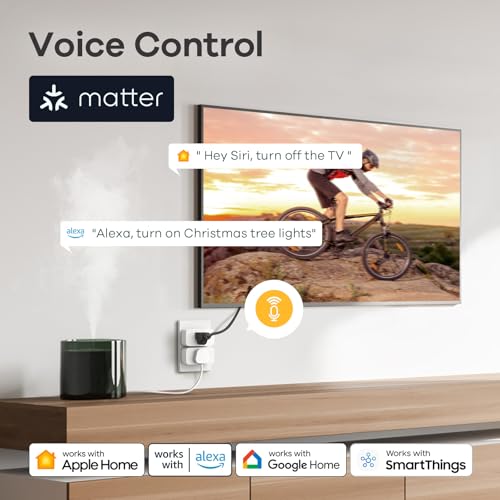
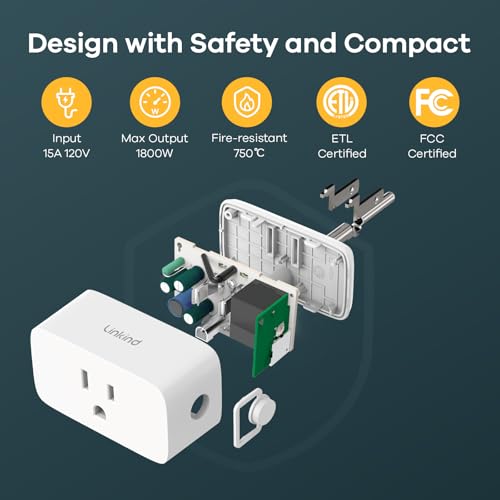
The Linkind Matter Smart Plug represents the next generation of smart home connectivity through its Matter protocol certification. Matter, backed by the Connectivity Standards Alliance and supported by Google, Amazon, Apple, and Samsung, creates a unified standard for smart home devices to communicate. This means Linkind plugs work seamlessly across multiple ecosystems without requiring separate apps or complicated setup procedures. The 15A/1800W maximum rating handles most household appliances including coffee makers, fans, heaters, and entertainment devices safely and reliably.
What sets Linkind apart is its offline-ready control capability. Once configured on your local network, these plugs communicate directly with other Matter devices using the Matter protocol, meaning they continue functioning even if your internet connection drops. This resilience proves invaluable during connectivity issues. The plugs support remote control through apps, allowing you to turn devices on before arriving home or off after leaving. Flexible scheduling and timer functions help reduce energy consumption by automatically powering down devices after set periods. for a 2-pack, Linkind offers exceptional value while supporting Google Home, Alexa, Apple HomeKit, and SmartThings simultaneously. Note that Matter-certified hubs like HomePod, Echo Dot, or Nest devices enhance functionality, though the AiDot app provides alternative control without a hub.
Best for: Users wanting future-proof smart plugs that work across multiple ecosystems and prioritize offline reliability and Matter protocol support. Pros: Matter-certified for broad ecosystem compatibility, offline control capability, 15A/1800W rating handles most appliances, works with Google Home/Alexa/Apple/SmartThings, excellent value at $90.89 for 2-pack, remote control and scheduling features. Cons: Requires Matter-certified hub for full functionality with some platforms; setup more complex than traditional WiFi plugs; limited real-world usage data at launch.
GHome Smart Plug Mini WiFi Smart Outlet – 4 Pack with Alexa and Google Home

GHome Smart Plug Mini 4-Pack: Alexa & Google Home Compatible


As an Amazon Associate we earn from qualifying purchases. Product prices and availability are accurate as of the date/time indicated.
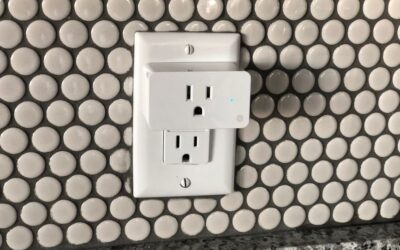
The GHome Smart Plug Mini offers a budget-friendly approach to smart outlet control, delivering essential functionality without premium pricing. The 4-pack provides excellent value for users wanting to control multiple devices throughout their home, from lamps and fans to coffee makers and holiday decorations. The compact design fits into tight spaces without blocking adjacent outlets, a practical consideration often overlooked in smart plug design. The plugs connect directly to your 2.4GHz WiFi network without requiring a separate hub, simplifying setup for users with existing WiFi infrastructure.
GHome plugs support both Alexa and Google Home voice control, offering flexibility in voice assistant choice or multi-assistant households. The app-based control allows managing devices from anywhere, while scheduling and timer features enable automated device management. The auto-off timer proves particularly useful for devices like space heaters, curling irons, or holiday lights that users frequently forget to turn off. ETL and FCC certification ensures safety compliance with a solid 10A/1200W power rating suitable for most household devices. The main workflow consideration is that initial setup requires the GHome app before linking to voice assistants—direct pairing isn’t available. At $29.99 for 4 plugs, this represents per outlet, making it one of the most economical options available.
Best for: Budget-conscious users wanting to control multiple devices with basic smart plug functionality and no hub requirements. Pros: Extremely affordable at $29.99 for 4-pack ($6.50 each), compact design doesn’t block adjacent outlets, works with both Alexa and Google Home, no hub required, scheduling and timer functions, ETL/FCC certified with 10A/1200W rating. Cons: Requires GHome app setup before voice assistant linking; 2.4GHz WiFi only, not compatible with 5GHz networks; no energy monitoring to track power consumption; limited customer reviews available for reliability assessment.
What Should You Look for When Choosing Google Home Compatible Devices?
Selecting the right Google Home compatible devices requires understanding several critical factors that determine functionality, reliability, and long-term satisfaction. The foundation of any smart home system is compatibility—verify that devices explicitly support Google Home through the Google Home compatible devices list. This official resource identifies thousands of tested products from verified manufacturers, ensuring your devices will work reliably with Google Assistant. Compatibility extends beyond simple voice control; some devices function as hub devices that strengthen your network, while others work only as controllable endpoints. Hub devices like the Nest Hub Max or Nest Mini can improve response times and enable local automation when internet connectivity drops.
Connectivity protocol selection significantly impacts smart home reliability and performance. Most modern devices use WiFi for direct connectivity, though some premium systems employ Zigbee, Z-Wave, or the emerging Matter protocol for enhanced efficiency and range. WiFi-connected devices offer broader compatibility but consume more power and can strain networks with many connected devices. Matter-certified products like the Linkind Smart Plugs represent the future of smart home standards, offering better interoperability across different ecosystems and improved offline functionality. When evaluating devices, check whether they support 2.4GHz, 5GHz, or both WiFi bands—some budget devices like the GHome plugs support only 2.4GHz, which may limit compatibility with modern routers prioritizing 5GHz networks.
Network infrastructure forms the backbone of reliable smart home operation. The Google Nest WiFi system provides a scalable mesh network specifically optimized for smart home device handling, supporting up to 200 connected devices with coverage extending to 4,400 square feet. The 2-pack configuration creates a primary router and extender, with options to add additional routers for expanded coverage. This infrastructure investment pays dividends through faster response times, more reliable voice command execution, and seamless device communication throughout your home. Budget alternatives work with existing WiFi networks, but performance may suffer if your current router struggles with device density or range.
Power requirements and safety certifications deserve careful attention when selecting smart plugs and outlet devices. The GHome Smart Plug Mini carries ETL and FCC certification with a 10A/1200W rating, suitable for most household devices but inadequate for high-power appliances. The Linkind Matter Smart Plug handles 15A/1800W, providing greater flexibility for demanding devices like space heaters or air conditioning units. Always verify that plug ratings exceed your intended device’s power consumption with a safety margin. Certified products undergo rigorous testing to prevent electrical fires and equipment damage, making certification status a non-negotiable factor for any device that remains plugged in continuously.
Display functionality determines whether you need a smart display or if voice-only control suffices. The Google Nest Hub Max 10″ provides the most comprehensive visual interface with its large touchscreen, camera, and premium speaker. The Nest Hub 7″ offers a middle ground with adequate screen space for weather, calendar, and photos without premium pricing. Voice-only speakers like the Nest Mini 2nd Generation cost less and occupy minimal space but require alternative devices for visual information. Consider your use cases—recipe viewing, video calling, security camera monitoring, and entertainment streaming all benefit from display functionality, while simple device control and information queries work fine with voice-only options.
Privacy and security considerations have become increasingly important in smart home selection. Devices with cameras like the Nest Hub Max raise privacy concerns for bathrooms, bedrooms, or other sensitive spaces. Review privacy policies to understand data collection practices, and verify that devices support local processing for commands when possible. The Linkind Matter plugs’ offline control capability means they function without internet connectivity, reducing cloud dependency and improving privacy. Ensure all devices support strong password protection and receive regular security updates from manufacturers. Check whether devices allow disabling microphones or cameras when not in use—many Google Home devices include physical mute buttons for added privacy control.
Budget allocation across your smart home ecosystem requires strategic thinking about priorities. Entry-level setups might include a Google Nest Mini 2nd Generation ($69) and a few GHome Smart Plugs (check current price each) for basic voice control and device automation, totaling under $100. Mid-range systems add the Google Nest Hub 7″ (check current price) for visual information and more sophisticated automation. Premium setups incorporate the Nest Hub Max ($290.10) as a central hub with the Nest WiFi system ($290.10) providing infrastructure, plus Matter-certified plugs for future-proof compatibility. Starting with essential devices and expanding gradually allows learning the ecosystem before major investment, preventing buyer’s remorse from unused features.
How Does Google Home Integration Improve Smart Home Automation?
Google Home transforms smart home control through intelligent automation that learns your preferences and executes complex routines with simple voice commands. The system’s natural language processing understands contextual requests like “good morning” that trigger multiple actions simultaneously—turning on lights, adjusting thermostat temperature, starting coffee makers, and reading calendar events. This automation capability eliminates repetitive manual control, saving time and enabling hands-free operation during busy mornings or when your hands are occupied cooking or working.
Routines represent the most powerful automation feature, allowing you to create sequences of actions triggered by time, voice commands, or specific conditions. A “leaving home” routine might turn off lights, lock doors, adjust thermostats to energy-saving temperatures, and arm security systems with a single command or automatic trigger. The system supports conditional logic, executing different actions based on time of day, location, or device status. This sophistication enables energy efficiency through automatic device shutdown, enhanced security through coordinated locking and lighting, and convenience through hands-free control of complex sequences.
Frequently Asked Questions
Does Google Home require an internet connection to control smart devices?
Google Home primarily functions through cloud connectivity, requiring internet access for voice commands and remote control. However, some devices like Matter-certified plugs and certain hub devices can communicate locally without internet when configured on your home network. This offline capability ensures basic automation continues functioning during internet outages, though remote access and cloud-dependent features become unavailable. The Linkind Matter Smart Plugs specifically support offline control through local network protocols.
How many smart devices can Google Home control simultaneously?
Google Home systems can control hundreds of devices, with the Google Nest WiFi infrastructure supporting up to 200 connected devices. The actual limit depends on your network quality, router capabilities, and device density. Performance may degrade with extremely high device counts, causing slower response times or occasional connectivity issues. Most typical homes operate 20-50 devices without problems, providing substantial automation capabilities for comprehensive smart home setups.
What’s the difference between Google Home and Google Assistant?
Google Assistant is the AI engine powering smart home control and voice interactions, while Google Home refers to the hardware devices and ecosystem built around that assistant. Google Assistant handles voice recognition, natural language processing, and command execution across all Google devices and third-party integrations. Google Home encompasses the physical devices like speakers and displays that deliver the assistant experience, plus the companion app and cloud services supporting the ecosystem.
Can Google Home devices work with non-Google smart home devices?
Yes, Google Home supports over 200 devices from 50+ brands including Philips Hue, LIFX, Nest, Ecobee, and Samsung SmartThings. This broad compatibility means you can build multi-brand smart homes without vendor lock-in. The Matter protocol further expands compatibility by creating a unified standard. However, not all smart devices support Google Home—verify compatibility on the official Google Home compatible devices list before purchasing.
Do I need a Google Home hub device or can I use just speakers?
Voice-only speakers like the Nest Mini 2nd Generation provide full Google Home control without display functionality. Hub devices like the Nest Hub or Nest Hub Max offer additional capabilities including visual information display, faster response times, and enhanced local automation. For basic voice control and device automation, speakers suffice. For complex setups requiring visual feedback or maximum performance, hub devices provide better experience.
What’s the best way to secure Google Home devices?
Secure your Google Home ecosystem by using strong, unique passwords for your Google account, enabling two-factor authentication, and keeping all devices updated with latest firmware. Use the Google Home app to review device permissions and disable unnecessary features like microphones in sensitive rooms. Consider disabling voice unlock for sensitive commands like shopping or payments. Regularly audit connected devices and remove those no longer in use.
Which Google Home Products Should You Buy for Your Smart Home?
Your smart home investment should align with specific needs, budget constraints, and long-term automation goals. For users prioritizing a comprehensive central control hub with entertainment and video calling capabilities, the Google Nest Hub Max 10″ Smart Display delivers unmatched functionality. Its large touchscreen, integrated camera, premium speaker, and hub capabilities make it the most capable Google Home device available. The device justifies premium pricing through versatility—serving simultaneously as smart home controller, video call interface, entertainment hub, and security monitoring station. This choice suits users building premium smart homes with diverse device ecosystems and willingness to invest in flagship hardware.
Budget-conscious buyers seeking a capable smart home hub should prioritize the Google Nest Hub 7″ Smart Display (check current price). This first-generation device offers exceptional value through broad device compatibility (200+ devices from 50+ brands), personalized Voice Match technology, and adequate screen size for weather, calendar, and photo viewing. The check current price price point represents a significant savings compared to the Nest Hub Max while maintaining essential smart home control functionality. This option suits users wanting visual feedback and smart home automation without premium pricing, making it ideal for first-time smart home buyers or those with budget constraints.
Voice-only control enthusiasts and space-constrained users should consider the Google Nest Mini 2nd Generation Smart Speaker ($69). This compact device delivers excellent value through affordable pricing, impressive speaker quality, and wall-mountable design. The Nest Mini excels in bedrooms, offices, and kitchens where counter space is limited. Its ability to function as a hub device in some configurations provides faster smart home response times despite the lower price. This choice suits renters, apartment dwellers, and users wanting multiple Google Home devices throughout their homes without significant investment.
Network infrastructure investment through the Google Nest WiFi 2-Pack should be considered as foundational to reliable smart home operation. This mesh system handles up to 200 connected devices across 4,400 square feet, providing the robust connectivity necessary for dozens of smart devices. The investment pays dividends through faster response times, more reliable automation execution, and seamless device communication. This infrastructure choice suits users building substantial smart homes with many devices or those experiencing connectivity issues with existing routers.
Smart plug selection depends on your ecosystem priorities and budget. The Linkind Matter Smart Plug 2-Pack represents the future-proof choice, supporting Matter protocol certification and working across Google Home, Alexa, Apple HomeKit, and SmartThings simultaneously. These plugs’ offline control capability and broad ecosystem support justify their selection for users building multi-platform smart homes or anticipating future ecosystem expansion. The GHome Smart Plug Mini 4-Pack ($29.99) serves budget-conscious users wanting to control multiple devices with basic functionality and no hub requirements. The 4-pack pricing ($6.50 per outlet) makes this the most economical option for users wanting to automate numerous devices throughout their homes.
A practical starter setup might combine the Google Nest Mini 2nd Generation ($69) with a 4-pack of GHome Smart Plugs (check current price) for approximately $95, providing voice control and device automation across multiple rooms. Mid-tier setups add the Google Nest Hub 7″ (check current price) and upgrade plugs to Linkind Matter models ($15.99 for 2-pack), totaling around $225 for more sophisticated control. Premium installations incorporate the Nest Hub Max ($290.10), Nest WiFi system ($90.89), and multiple Linkind or GHome plug packs, enabling comprehensive automation across extensive device networks. Start with essential devices matching your immediate needs, then expand gradually as your comfort with the ecosystem grows and additional automation opportunities emerge.







Write Your Review
No reviews yet. Be the first to share your experience!