

What Is the Best Smart Thermostat That Learns Your Preferences in August 2026?
Quick Answer: The Google Nest Learning Thermostat (4th gen) is the best smart thermostat for learning your preferences in August 2026, featuring advanced adaptive algorithms that study your schedule and temperature adjustments to optimize energy savings up to 31%. For a budget-friendly alternative, the Sensi Smart Thermostat ST55 offers reliable learning capabilities at under $100 with Energy Star certification and privacy protection. Most smart thermostats range from $95 to $230, with mid-range options like the Google Nest Thermostat and ecobee Smart Thermostat Essential providing excellent learning features between $114 and $120. The key takeaway: modern smart thermostats don’t just follow your schedule—they actively learn from your behavior patterns to reduce energy waste while maintaining comfort.
Smart thermostats have revolutionized home climate control by moving beyond simple programmable schedules to genuinely intelligent systems that understand your lifestyle. In August 2026, the technology has matured significantly, with leading models incorporating machine learning algorithms that analyze your temperature preferences, occupancy patterns, weather forecasts, and seasonal variations. These devices learn whether you prefer gradual temperature changes or quick adjustments, how you respond to different outdoor conditions, and even anticipate your needs before you manually change the thermostat. The learning process typically begins within the first week of installation and becomes increasingly sophisticated over several months as the system gathers more behavioral data. This article examines five top-performing smart thermostats that excel at preference learning, helping you understand how this technology works and which model best fits your home and budget.
Which Smart Thermostats Stand Out for Learning Your Preferences in 2026?
Sensi Smart Thermostat ST55: Privacy-First Learning for Budget-Conscious Homeowners
The Sensi Smart Thermostat ST55 represents an excellent entry point for homeowners seeking smart learning capabilities without premium pricing. Built on over 100 years of HVAC expertise from its parent company, Sensi combines straightforward learning functionality with strong privacy protections. This thermostat learns your preferences through flexible scheduling features and usage reports that track your comfort patterns over time. The device doesn’t require a common wire in most applications, making DIY installation accessible to average homeowners. Sensi’s learning system monitors your HVAC system performance and sends maintenance alerts, helping optimize efficiency as it learns your equipment’s behavior. The Energy Star certification indicates potential savings around 23% on HVAC energy costs. The mobile app provides remote access, allowing you to adjust temperatures from anywhere while the system continues learning your preferences. Sensi’s commitment to data privacy means your behavioral information stays on your device and isn’t sold to third parties, addressing growing privacy concerns among smart home users.

Sensi Smart Thermostat Wi-Fi Programmable ENERGY STAR ST55
- PRIVACY PROTECTION*: Sensi won’t sell your personal information to third parties
- EASY DIY INSTALLATION: Use the built-in level and step-by-step app instructions for a quick installation. Works with HVAC equipment found in most homes. Common wire (c-wire) is not required in most applications
- SAVE ABOUT 23% ON HVAC ENERGY*: The ENERGY STAR-certified Sensi smart thermostat can help you save energy with features like flexible scheduling, remote access, and usage reports
- SMART MAINTENANCE: Sensi can help monitor the performance and efficiency of your HVAC system by delivering valuable usage reports, alerts about your equipment, and maintenance reminders like filter replacement
- SIMPLE CONFIGURATION: Looks and feels like a thermostat. Has buttons and fits the same space as a traditional thermostat so you don’t have to patch and paint your walls





As an Amazon Associate we earn from qualifying purchases. Product prices and availability are accurate as of the date/time indicated.
Best for: Budget-conscious homeowners prioritizing privacy and straightforward learning without complex features. Pros: Affordable pricing under $100, no C-wire required for most homes, strong privacy protections, Energy Star certified, simple DIY installation. Cons: Less advanced learning algorithms compared to premium models, limited integration with smart home ecosystems, basic display compared to newer competitors.
Google Nest Thermostat: Simplified Learning with Smart Home Integration
The Google Nest Thermostat represents Google’s streamlined approach to smart temperature learning, designed for homeowners who want intelligent features without excessive complexity. This thermostat learns your preferences through automatic away detection, which observes when your home is empty and adjusts temperatures accordingly—a fundamental learning behavior that reduces energy waste. The system integrates seamlessly with the Google Home app, allowing you to create energy-efficient schedules that the thermostat learns to optimize over time. Remote control capabilities enable family members to adjust temperatures from any device, and the system learns these adjustment patterns to predict future preferences. Built-in HVAC monitoring sends alerts about potential system issues and maintenance needs, helping the thermostat learn your equipment’s operational patterns. The Energy Star certification confirms its efficiency credentials. The Nest Thermostat works without a C-wire in most homes, though certain systems like heat pumps and zone-controlled setups may require additional power accessories. Integration with Google Assistant and all Matter-certified voice assistants provides hands-free control options.
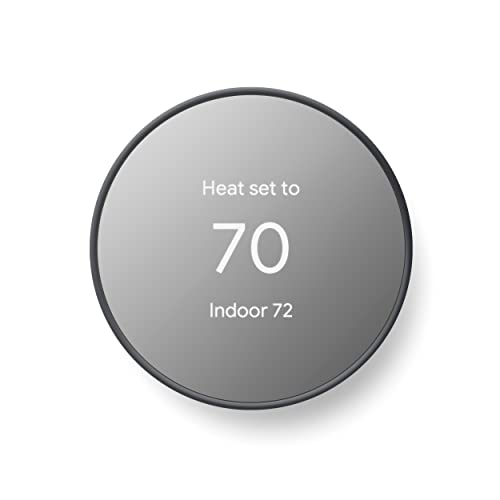
Google Nest Thermostat - ENERGY STAR Smart WiFi Control
- ENERGY STAR certified smart thermostat for home that helps you save energy and stay comfortable.Connectivity : Wi-Fi - 802.11b/g/n 2.4 GHz, 802.11a/n 5 GHz Wi-Fi., Wireless interconnect : Bluetooth Low Energy Please refer to the product description section below for all applicable legal disclaimers.Product note: You can also check your system’s compatibility before purchasing a Nest thermostat with our online Nest Compatibility Checker on the Google Nest support page
- The Nest Thermostat is designed to work without a C wire in most homes, but for some systems, including heating only, cooling only, zone controlled, and heat pump systems, you’ll need a C wire or other compatible power accessory
- Nest Thermostat turns itself down when you leave, so you don’t waste energy heating or cooling an empty home. Lock feature: No
- Programmable thermostat that lets you create an energy efficient schedule in the Google Home app on your Android or iPhone
- Remote control lets family members change the thermostat temperature from anywhere on a phone, laptop, or tablet[1]
- Savings Finder looks for more ways your thermostat can help you save, and suggests tweaks to your schedule in the app; check with your energy provider to learn more about rebates and more ways to save on a Nest thermostat
- Smart thermostat with HVAC monitoring, which looks out for your heating and cooling systems; sends an alert if something doesn’t seem right, along with helpful reminders to make maintenance easier[2]
- Control Nest Thermostat with Google Home and other smart home platforms. Compatible with Google Assistant and all Matter-certified voice assistants. Voice control requires a compatible smart device.
- Connectivity : Wi-Fi - 802.11b/g/n 2.4 GHz, 802.11a/n 5 GHz Wi-Fi., Wireless interconnect : Bluetooth Low Energy
- Please refer to the product description section below for all applicable legal disclaimers


As an Amazon Associate we earn from qualifying purchases. Product prices and availability are accurate as of the date/time indicated.
Best for: Google ecosystem users wanting reliable learning features with seamless smart home integration. Pros: Energy Star certified, works without C-wire in most homes, remote scheduling and control, HVAC monitoring alerts, Matter-compatible, affordable mid-range pricing. Cons: No lock feature for restricted access, requires C-wire for certain system types, limited real-world usage data available, compatibility verification needed before purchase.
Google Nest Learning Thermostat (4th gen) in Obsidian: Premium Learning with Advanced Display Technology
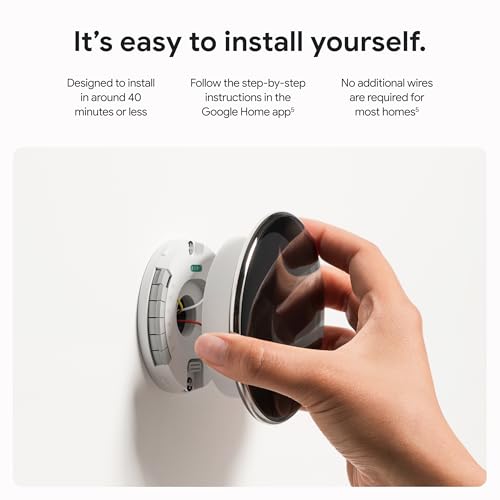
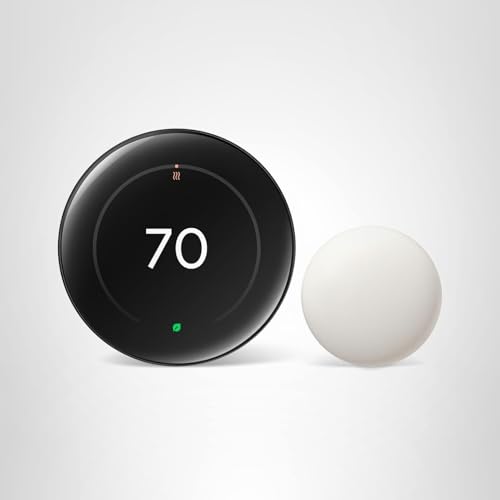
The Google Nest Learning Thermostat (4th gen) in Obsidian represents the pinnacle of smart thermostat learning technology in August 2026. This premium model features Nest’s most sophisticated learning algorithms, which analyze your temperature adjustments, daily routines, seasonal patterns, and weather forecasts to optimize heating and cooling automatically. The 60% larger display with Dynamic Farsight technology allows you to see information from across the room, with automatic brightness adjustment that learns your viewing preferences. The included Nest Temperature Sensor (2nd gen) enables room-by-room learning, allowing the system to understand temperature variations throughout your home and adjust accordingly. Nest’s adaptive Eco mode represents advanced learning in action—it studies outdoor temperature trends and your away patterns to automatically set energy-saving temperatures when you’re gone. The system can help save up to 31% on heating and cooling bills according to manufacturer data. Works with most 24V systems including gas, electric, oil, forced air, heat pump, and radiant heating without requiring a C-wire in most homes. The Matter-compatible design ensures future-proof integration with evolving smart home standards.

Google Nest Learning Thermostat 4th Gen + Sensor
- Nest’s smartest, most advanced thermostat yet, the Google Nest Learning Thermostat (4th gen) is a beautiful, brilliant way to save energy, keep your home comfortable, and help make sure your heating and cooling systems are running smoothly[4]
- Savings you can count on: The Nest Learning Thermostat can help save up to 31% on heating and cooling bills[2]
- Improved compatibility: It works with most 24V systems, including gas, electric, oil, forced air, heat pump, and radiant, and no C wire is required for installation in most homes; visit the Nest Compatibility Checker for more info[5]
- Easy control in the Google Home app: Adjust on your phone from anywhere[1] or by using your voice with Alexa, Siri, or Google Assistant smart speaker[3], it’s easy to install yourself and it’s Matter compatible for simple integration into your smart home[5]
- Beautiful design: With a 60% larger display[11] and Dynamic Farsight, you can see info from across the room[1]; choose the design, like a clock or the weather; it automatically adjusts brightness for the best readability or you can adjust manually
- Better visibility into adjustments: Asks for permission to make schedule changes to help you save energy; you'll receive notifications in the Google Home app, and you can view and accept changes with a tap[1]
- Manage hot and cold spots: It comes with the Nest Temperature Sensor (2nd gen) and works with any Nest Temperature Sensor; put a sensor in any room and use the Google Home app to set the temp it should reach at a certain time of day
- New natural heating and cooling: Your thermostat learns how the temperature outside affects the temperature inside (for example, when the sun coming through the windows will heat the house naturally) and pauses your system to help you save[1]
- New Adaptive Eco: It uses the temperature outside to help find an energy-saving temperature when you’re away and returns to a comfortable temperature within an hour of your return[1]
- Please refer to the “Legal” section below for all applicable legal disclaimers denoted by the bracketed numbers in the preceding bullet points (e.g., [1], [2], etc.)




As an Amazon Associate we earn from qualifying purchases. Product prices and availability are accurate as of the date/time indicated.
Best for: Homeowners wanting the most advanced learning algorithms and willing to invest in premium technology for maximum energy savings. Pros: Advanced learning algorithms with up to 31% potential savings, 60% larger display with Dynamic Farsight, includes temperature sensor for multi-room learning, adaptive Eco mode, works with most 24V systems without C-wire, Matter-compatible. Cons: Premium pricing at $229.99, requires compatible 24V HVAC system, learning curve for maximizing features, limited customer reviews for real-world validation.
Google Nest Learning Thermostat (4th gen) in Silver: Premium Learning in Sleek Design
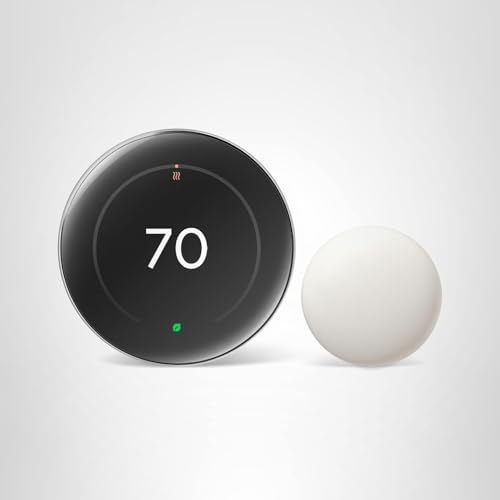
The Google Nest Learning Thermostat (4th gen) in Silver delivers identical learning capabilities to its Obsidian counterpart, offering the same advanced preference-learning algorithms in a different aesthetic finish. This model includes the Nest Temperature Sensor (2nd gen), enabling sophisticated multi-room learning where the thermostat understands temperature distribution throughout your home and adjusts heating and cooling zones intelligently. The permission-based schedule adjustment feature represents an innovative learning approach—the system suggests schedule changes based on learned patterns but asks for your approval, helping you understand how it’s adapting to your preferences. The 60% larger display provides excellent visibility with Dynamic Farsight technology that automatically adjusts brightness based on ambient light conditions, learning your preferred viewing patterns. The thermostat learns from your adjustments and notifications, building a behavioral profile that optimizes comfort while minimizing energy consumption. Works with most 24V systems without requiring a C-wire installation in most homes. Seamless integration with Google Assistant, Alexa, Siri, and Matter-certified devices provides flexible control options as the system learns your preferred interaction methods.

Google Nest Learning Thermostat 4th Gen + Sensor Bundle
- Nest’s smartest, most advanced thermostat yet, the Google Nest Learning Thermostat (4th gen) is a beautiful, brilliant way to save energy, keep your home comfortable, and help make sure your heating and cooling systems are running smoothly[4]
- Improved compatibility: It works with most 24V systems, including gas, electric, oil, forced air, heat pump, and radiant, and no C wire is required for installation in most homes; visit the Nest Compatibility Checker for more info[5]
- Easy control in the Google Home app: Adjust on your phone from anywhere[1] or by using your voice with Alexa, Siri, or Google Assistant smart speaker[3], it’s easy to install yourself and it’s Matter compatible for simple integration into your smart home[5]
- Beautiful design: With a 60% larger display[11] and Dynamic Farsight, you can see info from across the room[1]; choose the design, like a clock or the weather; it automatically adjusts brightness for the best readability or you can adjust manually
- Better visibility into adjustments: Asks for permission to make schedule changes to help you save energy; you'll receive notifications in the Google Home app, and you can view and accept changes with a tap[1]
- Manage hot and cold spots: It comes with the Nest Temperature Sensor (2nd gen) and works with any Nest Temperature Sensor; put a sensor in any room and use the Google Home app to set the temp it should reach at a certain time of day
- Savings you can count on: The Nest Learning Thermostat can help save up to 31% on heating and cooling bills [2]
- New natural heating and cooling: Your thermostat learns how the temperature outside affects the temperature inside (for example, when the sun coming through the windows will heat the house naturally) and pauses your system to help you save[1]
- New Adaptive Eco: It uses the temperature outside to help find an energy-saving temperature when you’re away and returns to a comfortable temperature within an hour of your return[1]
- Please refer to the “Legal” section below for all applicable legal disclaimers denoted by the bracketed numbers in the preceding bullet points (e.g., [1], [2], etc.)


As an Amazon Associate we earn from qualifying purchases. Product prices and availability are accurate as of the date/time indicated.
Best for: Premium buyers seeking advanced learning features with aesthetic flexibility and multi-room temperature management. Pros: Identical advanced learning to Obsidian model, includes temperature sensor for multi-room optimization, permission-based schedule adjustments, 60% larger display, Matter-compatible, works with most 24V systems. Cons: Premium $229.99 pricing, requires compatible 24V system, full features depend on Google Home app, compatibility checker required before purchase, limited real-world customer reviews.
ecobee Smart Thermostat Essential: Balanced Learning with Multi-Assistant Support
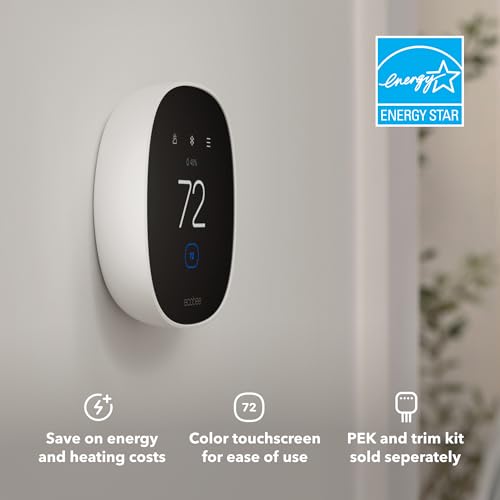
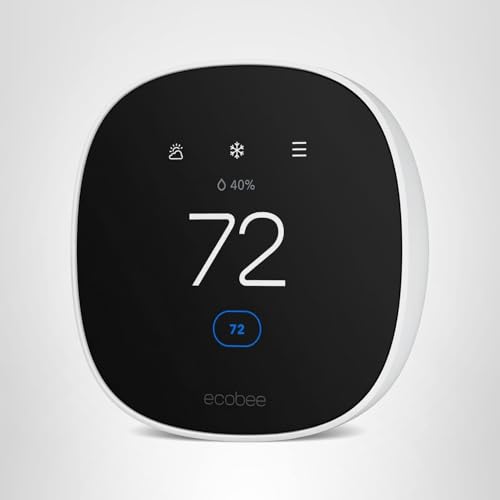
The ecobee Smart Thermostat Essential provides a compelling middle ground between budget and premium options, offering solid learning capabilities with broad smart home compatibility. This thermostat learns your preferences through automatic schedule adjustments that optimize comfort when you’re home and save energy when you’re away. The learning system monitors your energy consumption patterns and adjusts based on your typical occupancy and temperature preferences. The color touchscreen interface allows intuitive adjustments that the system learns to predict, building a behavioral profile over time. Compatible with 85% of HVAC systems, including those without C-wires through the optional Power Extender Kit, ecobee’s learning technology adapts to diverse home configurations. The Energy Star certification indicates potential savings around 23% on heating and cooling costs. Integration with Siri, Alexa, and Google Assistant provides learning across multiple voice platforms—the system learns which voice assistant you prefer and optimizes accordingly. Free software upgrades ensure the learning algorithms remain current with the latest optimization techniques. The ecobee app provides detailed energy consumption tracking, helping you understand how the thermostat’s learning is impacting your utility bills.

ecobee Smart Thermostat Essential - WiFi Programmable with Voice Control
- Save up to 23% every year on heating and cooling costs, adjusts to your set schedule to save energy when you’re gone and optimize comfort when you’re home. Compared to a hold of 72
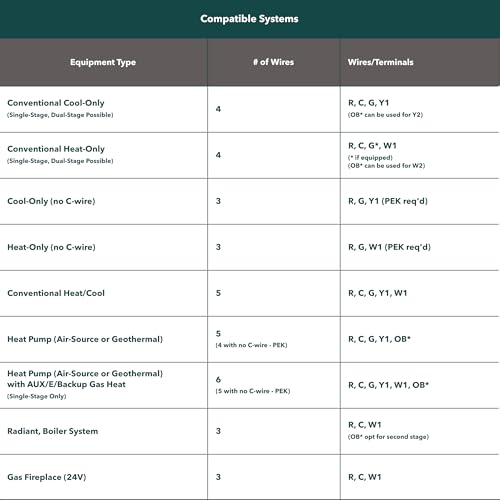
- Compatible with 85% of systems, check your system’s compatibility with our online ecobee Compatibility Checker on the ecobee support page
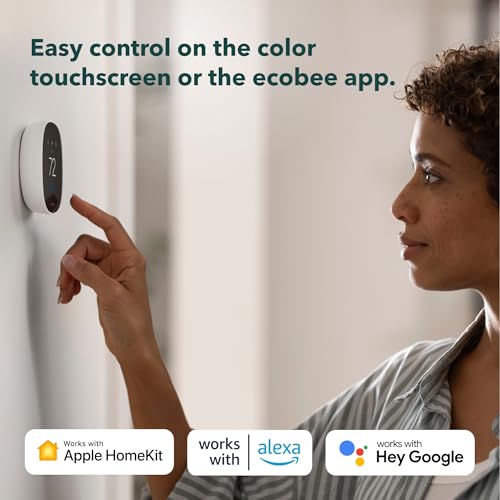
- Change your temperature by easily tapping the color touchscreen or using the ecobee app. Plus, free software upgrades ensure you get the best out of your Smart Thermostat Essential, for years to come
- Automatically adjusts to your set schedule to save energy when you’re gone and optimize comfort when you’re home. Keep track of your energy consumption when you're on the go on the ecobee app
- Easy DIY install. No C Wire, no problem. Get the ecobee Power Extender Kit (PEK) for homes without a C-Wire and keep your walls looking nice with our trim kit – both sold separately
- Works with leading smart home ecosystems. Pair Smart Thermostat Essential with Apple HomeKit, Google Assistant, and Alexa
- Works with most 24 VAC HVAC equipment: Gas, oil, electric, dual fuel, forced air Conventional (2H/1C or 1H/2C) Heat Pump (2H/1C) Boilers. You can check your system’s compatibility with our online ecobee Compatibility Checker on the ecobee support page
- Add in a SmartSensor which allows you to measure the temperature in rooms that matter most. It reads temperature and movement in whatever room it is placed in for complete home monitoring and energy savings (SmartSensor 2 pack sold separately)
- Built in eco+ Smart Features: Indoor humidity detection, schedule assistant, time of use which preheats or precools your home when energy is less expensive to reduce energy use during peak hours


As an Amazon Associate we earn from qualifying purchases. Product prices and availability are accurate as of the date/time indicated.
Best for: Homeowners wanting balanced learning features with flexibility across multiple smart home ecosystems and systems. Pros: Compatible with 85% of HVAC systems, no C-wire required for most homes, works with Siri/Alexa/Google Assistant, Energy Star certified, color touchscreen, free software upgrades, reasonable mid-range pricing. Cons: Learning algorithms less advanced than premium Nest models, Power Extender Kit sold separately for C-wire-free homes, limited advanced features compared to higher-tier options.
What Should You Look for When Choosing a Smart Thermostat That Learns Your Preferences?
Understanding how smart thermostats learn is essential for selecting the right model for your home. The most important factor is the learning algorithm sophistication—advanced models like the Nest Learning Thermostat (4th gen) use machine learning to analyze multiple data points simultaneously, including your temperature adjustments, occupancy patterns, outdoor weather, time of day, and seasonal variations. Basic learning models focus primarily on your schedule and manual adjustments, while premium models incorporate predictive algorithms that anticipate your needs before you manually change the thermostat. This distinction directly impacts energy savings, with advanced learners potentially saving 31% compared to 23% for simpler models.
System compatibility is critical for learning effectiveness. Your thermostat must work with your HVAC system type—whether you have gas, electric, heat pump, radiant, or zone-controlled heating. Some systems require a common wire (C-wire) for continuous power, while modern thermostats increasingly work without one. The learning process requires consistent power to monitor your home continuously; insufficient power can interrupt learning and reduce effectiveness. Before purchasing, use the manufacturer’s compatibility checker tool to verify your system supports the thermostat’s learning features. This step prevents installation problems that could compromise the learning process.
Multi-room temperature sensing dramatically enhances learning capabilities. Thermostats like the Nest Learning Thermostat (4th gen) with included temperature sensors learn how temperature varies throughout your home, adjusting heating and cooling to address hot and cold spots. This multi-zone learning prevents the common problem of one room being comfortable while others remain too warm or cold. The thermostat learns which rooms need more or less conditioning and optimizes your HVAC runtime accordingly, improving both comfort and efficiency.
Smart home ecosystem integration affects how the thermostat learns your preferences. Models supporting multiple voice assistants (Alexa, Google Assistant, Siri) and the Matter smart home standard can learn from interactions across different platforms and devices. This broader learning context helps the thermostat understand your complete lifestyle patterns. Additionally, thermostats that integrate with smart home automation—like learning when your smart lights turn on or when your door locks—can develop more sophisticated understanding of your daily routines.
Privacy and data security are increasingly important considerations for preference learning. Your thermostat collects detailed information about when you’re home, your temperature preferences, and your HVAC system operation. Some models, like Sensi, explicitly protect this data and don’t sell behavioral information to third parties. Others, like Google Nest, use your data within Google’s ecosystem for improved learning but share information across Google services. Understand each manufacturer’s privacy policy before purchasing, especially if you’re concerned about behavioral data collection.
Display quality and user interface design impact how effectively you can work with the learning system. Larger displays with better visibility help you understand what the thermostat is doing and make informed adjustments that feed into the learning process. Some models show you the changes they’re planning to make and ask for approval—a transparent approach that helps you guide the learning process. Others operate more autonomously, requiring you to check the mobile app to understand learning decisions.
Energy reporting features enhance your ability to understand and optimize the learning process. Thermostats that provide detailed usage reports, maintenance alerts, and energy consumption breakdowns help you see how the learning system is impacting your bills. This feedback allows you to make adjustments that guide the learning in your preferred direction. Compare models based on the depth and clarity of their energy reporting capabilities.
Installation ease affects how quickly the learning process can begin. DIY-friendly models with step-by-step app instructions allow faster installation, getting the thermostat monitoring your home sooner. Professional installation may be necessary for complex systems, but simpler models enable homeowners to install themselves and start the learning process immediately.
Frequently Asked Questions
How long does it take for a smart thermostat to learn my preferences?
Most smart thermostats begin learning immediately upon installation, with noticeable optimization within the first week. Basic learning of your schedule happens within days, while sophisticated preference understanding develops over 2-4 weeks. Advanced learning algorithms continue refining their understanding for several months, becoming increasingly effective as they collect more behavioral data across different seasons and weather conditions.
Can smart thermostats learn if I have an irregular schedule?
Yes, modern smart thermostats excel at learning irregular schedules. Advanced models analyze your actual occupancy patterns rather than relying on fixed schedules, automatically detecting when you’re home or away using sensors and app activity. They learn your unique rhythm, whether you work traditional hours or have variable schedules, adjusting automatically without requiring manual schedule programming.
Do smart thermostats that learn preferences save more energy than programmable ones?
Yes, learning thermostats consistently outperform traditional programmable models. According to Energy Star, learning thermostats can save 10-23% on heating and cooling costs compared to manual adjustment, with premium models achieving up to 31% savings. The continuous optimization based on learned preferences eliminates the energy waste from fixed schedules that don’t adapt to real-world variations.
What happens if I frequently override my smart thermostat’s learned settings?
Smart thermostats learn from your overrides. If you regularly adjust temperatures that the thermostat set based on its learning, the system recognizes this pattern and adjusts its future decisions accordingly. Your manual adjustments guide the learning process, helping the thermostat understand your true preferences better than its initial assumptions. This feedback loop ensures the learning system continuously improves.
Can I transfer a smart thermostat’s learned preferences if I move homes?
Most smart thermostats don’t transfer learned preferences between homes because learning is specific to your previous home’s HVAC system, layout, and climate. You can take the thermostat to your new home, but it will begin the learning process fresh, which is actually beneficial since your new home likely has different heating and cooling characteristics that require new learning.
Do smart thermostats learn better with or without temperature sensors?
Smart thermostats with additional temperature sensors learn significantly better, especially in multi-story or large homes. Sensors in different rooms help the thermostat understand temperature distribution and learn how to optimize comfort throughout your entire home. Single-sensor thermostats learn your overall preferences but may miss localized comfort issues that additional sensors would address.
Which Smart Thermostat Should You Buy for Learning Your Preferences?
Selecting the best smart thermostat for preference learning depends on your budget, HVAC system, and desired feature set. For homeowners prioritizing affordability without sacrificing learning capability, the Sensi Smart Thermostat ST55 at under $100 delivers reliable preference learning with strong privacy protections. This model learns your schedule and temperature preferences effectively while ensuring your behavioral data remains private. It’s ideal for budget-conscious buyers or those in rental situations where premium investments aren’t justified.
The Google Nest Thermostat at $114 offers excellent value for Google ecosystem users. Its automatic away detection learns when your home is empty and adjusts temperatures accordingly, while remote scheduling builds preference understanding across your household. This mid-range option provides solid learning without the premium price, making it perfect for homeowners wanting reliable learning with smart home integration.
The ecobee Smart Thermostat Essential at $119.99 provides balanced learning with superior multi-assistant compatibility. If you use Alexa, Google Assistant, and Siri interchangeably, ecobee’s learning system works across all platforms. Its 85% system compatibility and optional C-wire-free installation make it accessible for diverse home configurations. The color touchscreen and energy tracking help you understand and guide the learning process.
For maximum learning sophistication and energy savings, the Google Nest Learning Thermostat (4th gen)—available in both Obsidian and Silver finishes at $229.99—represents the pinnacle of preference-learning technology in August 2026. The included Nest Temperature Sensor enables multi-room learning, while the 60% larger display with Dynamic Farsight provides excellent visibility. The adaptive Eco mode and permission-based schedule adjustments showcase advanced learning in action. This premium investment is justified for homeowners seeking maximum energy savings and the most sophisticated preference understanding.
Your choice ultimately depends on balancing learning capability with your budget and smart home ecosystem preferences. All five models excel at learning your preferences through different approaches—from Sensi’s privacy-focused simplicity to Nest’s advanced machine learning algorithms. Consider your HVAC system compatibility, smart home integration needs, and whether you value privacy or advanced features more heavily. For detailed guidance on specific home situations, explore our related articles on smart thermostats for small homes, how smart thermostats work and installation, and smart thermostats for Apple HomeKit.










Write Your Review
No reviews yet. Be the first to share your experience!