

What Is the Best Smart Lock in September 2026?
Quick Answer: The Schlage Encode Smart WiFi Deadbolt Lock with Greenwich Trim stands out as the best overall smart lock in September 2026, offering built-in WiFi connectivity, support for up to 100 access codes, voice control integration with Alexa and Google Home, and BHMA’s highest residential security certification. For budget-conscious buyers, the Philips Wi-Fi Door Lock delivers excellent value with fingerprint recognition, app control, and multiple unlock methods without sacrificing core smart home features. Most quality smart locks range from $79 to $229, with prices reflecting WiFi capabilities, biometric features, and ecosystem integration. The key takeaway: today’s best smart locks combine multiple authentication methods, long battery life, and seamless app integration to balance security, convenience, and affordability.
The smart lock market has evolved dramatically since early 2026, with manufacturers prioritizing biometric authentication, built-in WiFi connectivity, and ecosystem compatibility. Smart locks now serve as central security hubs in modern homes, replacing traditional deadbolts with keyless entry systems that offer remote access, real-time monitoring, and integration with voice assistants. The category encompasses five main types: WiFi-enabled locks with app control, fingerprint-recognition models with AI learning, keypad-based systems, hybrid locks combining multiple methods, and budget-friendly options under $100. This comprehensive review examines five standout models representing different price points and feature sets, helping homeowners make informed decisions based on their specific security needs, budget constraints, and smart home ecosystem preferences.
Which Smart Locks Stand Out in September 2026?
Schlage Encode Smart WiFi Deadbolt Lock with Greenwich Trim, Matte Black
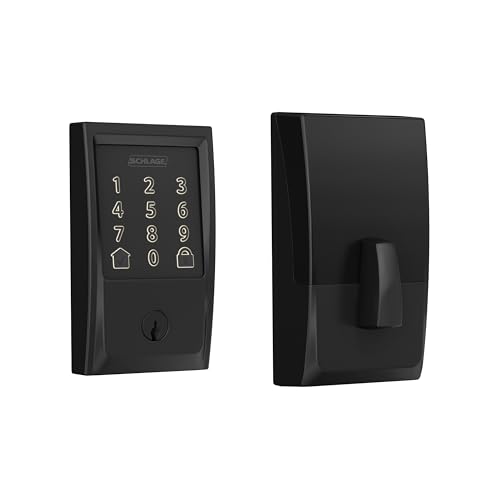
Schlage Encode Smart WiFi Deadbolt Lock - Matte Black
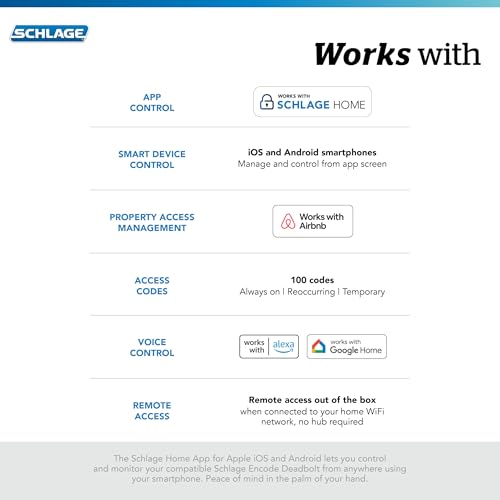
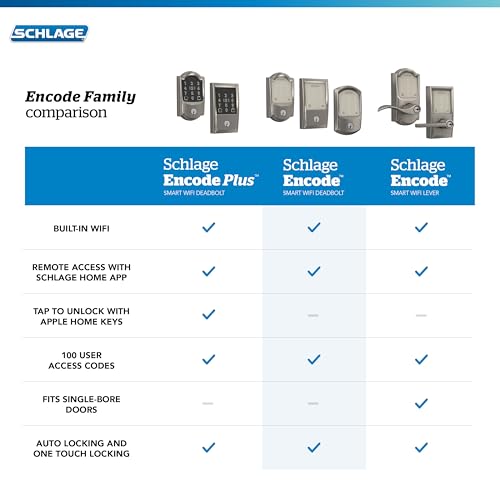
- ANYWHERE ACCESS: With built-in WiFi compatibility, you can easily and securely connect your Schlage Encode Deadbolt to your home WiFi network to control and monitor your home from anywhere with the Schlage Home app
- PEACE OF MIND: Lock and unlock from anywhere, manage up to 100 access codes for keyless entry, view lock history, receive customizable notifications and easily manage multiple locks at once - all when paired to the Schlage Home app and connected to a secure WiFi network
- VOICE CONTROL: Works with Alexa and Google Home for optional, hands-free convenience when paired with the Schlage Home app and a voice enabled device
- ADVANCED SECURITY: Secure, encrypted connection; built-in, customizable alarm for door movement and forced entry attempts; fingerprint-resistant touchscreen; certified highest residential Security, Durability and Finish rating by BHMA industry experts
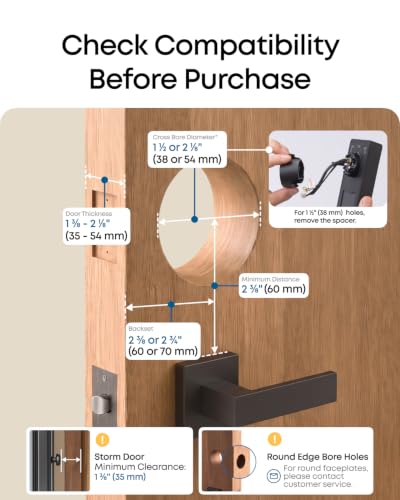
- EASY INSTALL: Install in minutes with just a screwdriver, no hardwiring required; Snap ‘n Stay design helps keep the lock on the door so both hands are free; fits standard doors with 1-3/8 in to 1-3/4 in door thickness and 2-3/8 in or 2-3/4 in backset
- COME AND GO WITH EASE: Auto-lock conveniently relocks the door for you and has a variety of time delay options to choose from or can be turned off completely; One-touch locking from the exterior touchscreen makes locking up when leaving easy
- BATTERY-OPERATED: Uses four AA batteries-included; up to six months of battery life with typical use; low-battery indicator on lock touchscreen and in Schlage Home app provides advance notice; one physical backup key included





As an Amazon Associate we earn from qualifying purchases. Product prices and availability are accurate as of the date/time indicated.
The Schlage Encode Smart WiFi Deadbolt represents the premium tier of smart lock technology, delivering enterprise-grade security with consumer-friendly convenience. Its built-in WiFi connectivity eliminates the need for a separate hub, allowing homeowners to lock, unlock, and monitor their doors from anywhere using the Schlage Home app. The lock supports up to 100 unique access codes, making it ideal for households with multiple family members, frequent guests, or rental properties requiring temporary access management. Integration with Alexa and Google Home enables voice-controlled entry, adding hands-free convenience for situations when your hands are full or you’re managing multiple tasks simultaneously.
Security credentials are exceptional: Schlage’s Encode carries BHMA’s highest residential ratings for security, durability, and finish quality—a distinction earned through rigorous third-party testing and validation. The lock features a fingerprint-resistant touchscreen, customizable alarm notifications for door movement and forced entry attempts, and encrypted connection protocols that protect access credentials from interception. Installation takes minutes with just a screwdriver; the Snap ‘n Stay design keeps the lock firmly attached to the door during setup, eliminating frustration. Battery life extends six months on standard alkaline batteries, with low-battery alerts preventing unexpected lockouts. This model fits standard doors with 1-3/8 to 1-3/4 inch thickness and 2-3/8 or 2-3/4 inch backsets, covering most residential installations.
Best for: Homeowners prioritizing professional-grade security, remote access monitoring, and voice integration across multiple properties or complex households.
Pros: Built-in WiFi eliminates hub requirements; supports 100 access codes for flexible household management; BHMA highest-rated security certification; tool-free installation; six-month battery life; customizable alarm notifications.
Cons: Premium pricing at $229 significantly exceeds budget alternatives; requires stable WiFi and Schlage Home app pairing for remote features; offline functionality remains limited; no user reviews available yet to assess long-term reliability.
eufy Security Smart Lock C220, Fingerprint Keyless Entry Door Lock

eufy Security Smart Lock C220: Wi-Fi Fingerprint Deadbolt
- 6 Ways to Unlock: Unlock with a touch for less than 1s with fingerprint lock. You can also open your front door lock via the eufy Security app, using the keypad or physical key, from Apple Watch, or use your voice with Alexa/Google Voice Assistant.
- 8 Months Battery Life: With 8 AA batteries, Smart Lock C220 runs around 8 months. Experience ultimate convenience and peace of mind with our long-lasting power solution. *May vary depending on the frequency of the lock being used.
- Self-learning AI: Fingerprint door lock recognition gets more precise with every touch, so you don't have to try agian and again to get in. Never be awkward or upset at unlocking the door.
- Control from Anywhere with Built-in Wi-Fi: No bridge required, you can control your wifi smart lock from anywhere via the eufy Security app. Easy setup.
- Integrated eufy ecosystem: If you have a eufy doorbell, you can add your wifi door lock to your routines and control devices together for keyless entry within the eufy Security app.
- Easy Installation: Compatible with most standard deadbolts, and easily fits bores under 54mm just by removing the spacer. 15-minute easy install without drilling.
- Security and Durability: BHMA Grade 3 Certified after being locked and unlocked more than 100,000 times. Send an alarm triggered by an unusual attempt to open your smart deadbolt lock. Operating temperatures range from -22℉ to 158℉ (-30℃ to 70℃). IP53 Waterproof.


As an Amazon Associate we earn from qualifying purchases. Product prices and availability are accurate as of the date/time indicated.
The eufy Security Smart Lock C220 bridges the gap between budget-friendly pricing and premium biometric features, offering fingerprint recognition, built-in WiFi, and six distinct unlock methods for $109.99. The standout feature is self-learning AI fingerprint technology that improves recognition accuracy with every touch, adapting to changes in fingerprints over time and reducing frustrating failed unlock attempts. Recognition speed reaches under 1.5 seconds, ensuring quick access without delays. The lock supports six unlock methods: fingerprint scanning, eufy Security app control, physical keypad entry, backup physical keys, Apple Watch integration, and voice commands through Alexa or Google Voice Assistant, providing flexibility for different scenarios and household preferences.
Battery performance is impressive: the C220 runs approximately eight months on eight AA batteries, minimizing maintenance frequency and replacement costs. Built-in WiFi eliminates the need for a separate bridge device, simplifying setup and reducing hardware clutter. The lock integrates seamlessly with the broader eufy ecosystem—if you own a eufy doorbell, you can add the smart lock to automated routines and control both devices together within a single app interface. Installation is straightforward, requiring no drilling and completing in approximately 15 minutes on standard US and Canadian deadbolts. The lock operates reliably across extreme temperature ranges from -22°F to 158°F, with IP53 waterproof rating protecting against moisture damage. eufy backs the product with 18-month protection and round-the-clock customer service support.
Best for: Budget-conscious homeowners seeking biometric authentication, ecosystem integration, and multiple unlock methods without premium pricing.
Pros: No bridge required thanks to built-in WiFi; self-learning fingerprint AI improves over time; six unlock methods provide maximum flexibility; impressive eight-month battery life; fast 1.5-second recognition; excellent customer service.
Cons: No customer reviews available yet; limited to standard US/CA deadbolt compatibility; actual battery life varies with usage frequency; fingerprint recognition may struggle with wet or worn fingerprints.
Tapo Smart Wi-Fi Door Lock, Deadbolt, Fingerprint Recognition, DL110

Tapo Smart Wi-Fi Door Lock with Fingerprint & Keypad
- 6 Ways to Securely Access: Access in six different ways: by fingerprint recognition, using custom passcodes on the keypad, manage from anywhere with Wi-Fi, via close-range Bluetooth, your smart home assistant, or by using the included backup keys.
- 1-Year Battery Life: Enjoy minimal maintenance and a full year of continuous operation with the removable and rechargeable battery.
- Rapid Fingerprint Recognition: Advanced fingerprint sensor accurately recognizes fingerprints and unlocks your door in just 0.42 seconds. Register and save up to 100 different fingerprints at a time.
- USB-C Charging: Features a built-in USB-C port for easy recharging, ensuring your doorbell stays powered and vigilant when you need it most.
- Manage Resident & Guest Access: Create resident profiles with custom permanent codes, or set up one-time or scheduled codes for guests.


As an Amazon Associate we earn from qualifying purchases. Product prices and availability are accurate as of the date/time indicated.
TP-Link’s Tapo Smart Wi-Fi Door Lock DL110 delivers enterprise-grade fingerprint recognition at accessible pricing, featuring advanced biometric technology that unlocks doors in just 0.42 seconds—the fastest recognition time among all reviewed models. The lock registers and stores up to 100 different fingerprints, accommodating large households, frequent guests, and property managers handling multiple properties. Beyond biometric access, the DL110 provides six distinct entry methods: fingerprint scanning, custom keypad passcodes, WiFi-enabled app control, close-range Bluetooth connectivity, smart home assistant voice commands, and included backup physical keys. This comprehensive approach ensures you always have access regardless of technical circumstances.
Battery longevity stands out as exceptional: the removable and rechargeable battery provides a full year of continuous operation, the longest battery life in this review. USB-C charging ensures compatibility with modern power standards—any common USB-C charger or power bank can restore the battery, eliminating the need to purchase specific battery types. The lock manages resident and guest access through customizable profiles: permanent access codes for household members, one-time codes for delivery personnel, or scheduled codes for regular service providers like cleaners or maintenance workers. This granular access control provides security transparency and audit trails for property managers. The lock integrates with major smart home ecosystems and voice assistants, fitting seamlessly into existing automation routines.
Best for: Tech-savvy homeowners and property managers requiring the fastest fingerprint recognition, year-long battery life, and comprehensive access management capabilities.
Pros: Fastest fingerprint recognition at 0.42 seconds; exceptional one-year battery life with USB-C charging; supports 100 fingerprints; six unlock methods; granular guest access management; smart home ecosystem integration.
Cons: No customer reviews available; limited information on installation complexity; unclear compatibility with non-standard door configurations; USB-C charging port durability concerns not addressed.
Philips Wi-Fi Door Lock, WiFi Smart Lock Keyless Entry Deadbolt

Philips Wi-Fi Smart Door Lock with Fingerprint & Voice Control
- 𝐅𝐥𝐞𝐱𝐢𝐛𝐥𝐞 𝐖𝐚𝐲𝐬 𝐭𝐨 𝐔𝐧𝐥𝐨𝐜𝐤: Unlock the way you want: app, passcode, fingerprint, physical key, or voice via Alexa/Google Assistant. Everyone in the family can choose what works best — convenience meets flexibility. Batteries are not included.
- 𝐔𝐧𝐥𝐨𝐜𝐤 𝐅𝐫𝐨𝐦 𝐀𝐧𝐲𝐰𝐡𝐞𝐫𝐞: Built-in Wi-Fi lets you lock and unlock your door remotely anytime, anywhere from your smartphone — no extra hub needed. Stay connected and in control, even when you’re at work or on vacation. Only support 2.4Ghz network. Keep the router and lock with 65ft for better remote control.
- 𝗩𝗼𝗶𝗰𝗲 𝗖𝗼𝗻𝘁𝗿𝗼𝗹 𝗥𝗲𝗮𝗱𝘆: Pair with Alexa or Google Assistant to unlock or lock with your voice. Great for when your hands are full or you're relaxing at home and still welcome who’s at the door. Note: Please log in to your own Google or Alexa account first before use Voice Control and make sure your network connection is stable.
- 𝗬𝗼𝘂𝗿 𝗙𝗶𝗻𝗴𝗲𝗿𝘀 𝗶𝘀 𝗬𝗼𝘂𝗿 𝗞𝗲𝘆: Just one touch unlocks the door instantly. No need to search for keys — Your fingers is your keys, perfect for busy mornings. Philips wifi lock store multiple prints for easy family access.
- 𝐂𝐨𝐝𝐞 𝐀𝐜𝐜𝐞𝐬𝐬 𝐌𝐚𝐝𝐞 𝐒𝐢𝐦𝐩𝐥𝐞: Create up to 100 custom passcodes for family, friends, or renters. Easily share unlimited one-time or scheduled codes to guests, cleaners, or deliveries— no need to be home to open the door.
- 𝗚𝗲𝘁 𝗡𝗼𝘁𝗶𝗳𝗶𝗲𝗱 𝗜𝗻𝘀𝘁𝗮𝗻𝘁𝗹𝘆: Always know who’s coming and going when your door opens, locks. Real-time alerts keep you in the loop, even when you're away. Check a full history of who accessed your home and when if you want. Note: To ensure proper operation, please use AA alkaline (LR6) batteries only.
- 𝗔𝘂𝘁𝗼-𝗟𝗼𝗰𝗸 𝗳𝗼𝗿 𝗔𝗱𝗱𝗲𝗱 𝗦𝗲𝗰𝘂𝗿𝗶𝘁𝘆: Set your door to lock automatically after 10 to 180 seconds. Whether you’re rushing out or have your hands full, your home stays secure without extra steps. It doesn't have door sensor.
- 𝐄𝐱𝐭𝐫𝐚 𝐏𝐫𝐨𝐭𝐞𝐜𝐭𝐢𝐨𝐧 𝐰𝐢𝐭𝐡 𝐀𝐰𝐚𝐲 𝐌𝐨𝐝𝐞: Going out of town? Activate Away Mode to disable all unlock methods except the master code. A simple way to add extra security while you’re away or on long trips.
- 𝗘𝗮𝘀𝘆 𝗜𝗻𝘀𝘁𝗮𝗹𝗹𝗮𝘁𝗶𝗼𝗻: Install it yourself in minutes using just a screwdriver. Compatible with most doors 1-3/8" to 2" (38mm to 50mm) thick. Follow the instruction manual or installation video and install the lock step by step. Proper installation ensures reliable lock operation. Note: Please Route the cable underneath the latch and insert the tailpiece into the latch slot to ensure proper lock operation.
- 𝐓𝐢𝐦𝐞𝐥𝐲 𝐂𝐮𝐬𝐭𝐨𝐦𝐞𝐫 𝐒𝐞𝐫𝐯𝐢𝐜𝐞: Philips US-based team is available by phone Mon-Fri 9AM - 9PM & Sat 10AM -6PM EST, plus 24/7 via email. We’re here when you need us. Note: 𝗣𝗹𝗲𝗮𝘀𝗲 𝗰𝗵𝗲𝗰𝗸 𝘆𝗼𝘂𝗿 𝗱𝗼𝗼𝗿 𝘀𝗶𝘇𝗲 𝗯𝗲𝗳𝗼𝗿𝗲 𝗽𝘂𝗿𝗰𝗵𝗮𝘀𝗲.


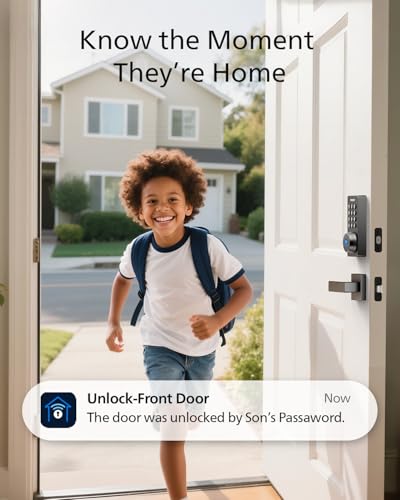


As an Amazon Associate we earn from qualifying purchases. Product prices and availability are accurate as of the date/time indicated.
The Philips Wi-Fi Door Lock emerges as the best budget-friendly option at $109.98, delivering fingerprint recognition, app control, and voice integration without premium pricing. This lock provides five distinct unlock methods: smartphone app access from anywhere, custom passcodes via physical keypad, fingerprint biometric scanning, voice commands through Alexa or Google Assistant, and traditional backup physical keys. The flexible approach accommodates different household members’ preferences—tech-savvy users enjoy app control, elderly family members appreciate keypad codes, and everyone benefits from physical key backups. The lock supports up to 100 custom passcodes with granular control: permanent codes for household members, one-time codes for single-use guest access, or scheduled codes for recurring service providers, offering security transparency without sacrificing convenience.
Built-in WiFi eliminates the need for a separate hub or bridge device, simplifying setup and reducing hardware costs. Remote control functionality operates within a 65-foot range from your WiFi router, sufficient for most residential properties. The auto-lock feature automatically secures the door within a user-configurable window (10-180 seconds after unlocking), ensuring doors never remain accidentally unsecured. Real-time notifications and access history logs provide security awareness, showing who accessed the door and when. Installation requires measuring door thickness beforehand (1-3/8 to 2 inches) to ensure compatibility, but the process remains straightforward without requiring professional assistance. Note that batteries are not included, requiring separate purchase of 4-8 AA alkaline batteries, and the lock only supports 2.4GHz WiFi networks, potentially limiting compatibility with newer dual-band routers.
Best for: Budget-conscious homeowners seeking fingerprint recognition, app control, and voice integration without paying premium prices.
Pros: Affordable $79.98 price point; multiple unlock methods including fingerprint and voice control; built-in WiFi without hub requirement; up to 100 custom passcodes with scheduling; auto-lock feature; real-time notifications and access history.
Cons: Batteries not included; 2.4GHz WiFi-only support limits newer router compatibility; no door sensor to detect if door is physically open; requires 65-foot router proximity; no customer reviews available; installation requires pre-measurement.
Wyze Auto-Lock Bolt v2, Fingerprint Keyless Entry Smart Lock

Wyze Auto-Lock Bolt v2 Smart Lock - Fingerprint & Wi-Fi
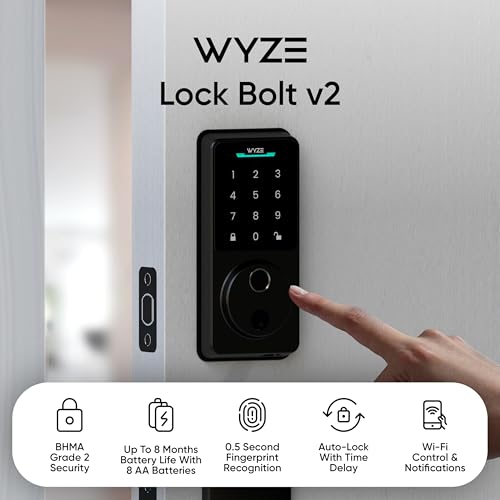
- Effortless Entry, Lasting Clarity: Unlock in 0.5 seconds with Wyze Lock Bolt v2's fingerprint scanner. Its scratch and smudge-resistant tempered glass ensures reliable reads and maintains a pristine look.
- The Lock That Learns with You: Our AI smart lock learns from every touch, constantly improving to deliver faster, more accurate recognition over time. This eliminates failed scans and creates a seamlessly adaptive entry experience just for you.
- 8-Month Power with Emergency Backup: Includes 8 AA batteries for up to 8 months of use. If batteries die, the USB-C port lets you power it with any common power bank to unlock the door.
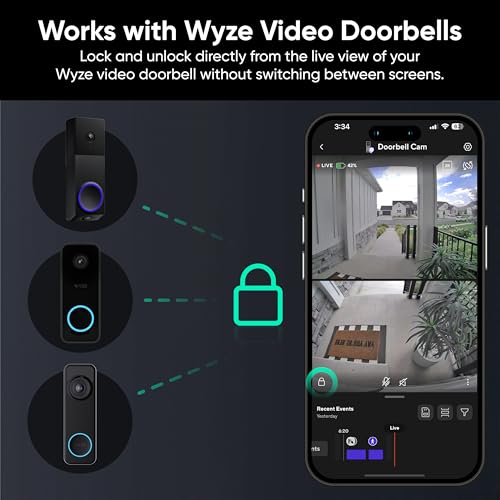
- Total Control in the Wyze App: Remotely check and manage your lock via built-in Wi-Fi. When paired with a Wyze Video Doorbell, unlock directly from the live feed to visually verify and welcome visitors instantly.
- Your Door, Your Way: Enjoy total unlocking freedom. Choose what fits your moment: fingerprint for speed, the app for control, a code for convenience, or the physical keys as a guaranteed backup. Experience ultimate flexibility and peace of mind.


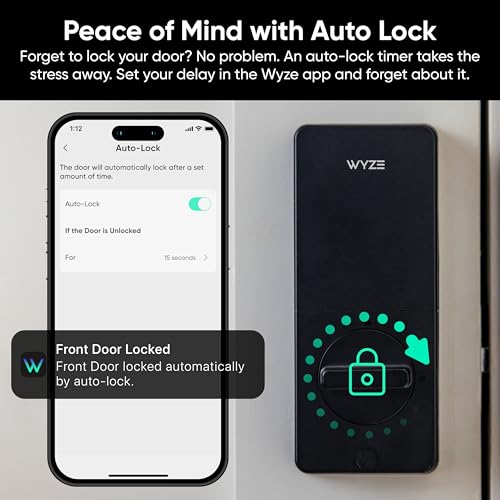





As an Amazon Associate we earn from qualifying purchases. Product prices and availability are accurate as of the date/time indicated.
The Wyze Auto-Lock Bolt v2 combines ultra-fast biometric recognition with AI-powered learning and exceptional battery life at an accessible $79 price point. The standout feature is lightning-fast 0.5-second fingerprint unlock speed, achieved through advanced sensor technology and optimized algorithms. The lock’s scratch and smudge-resistant tempered glass touchscreen maintains reliable fingerprint reads despite daily wear, ensuring consistent performance over years of use. The integrated AI learning system continuously adapts to your fingerprint characteristics, improving recognition accuracy with every scan and eliminating frustrating failed unlock attempts that plague less sophisticated systems.
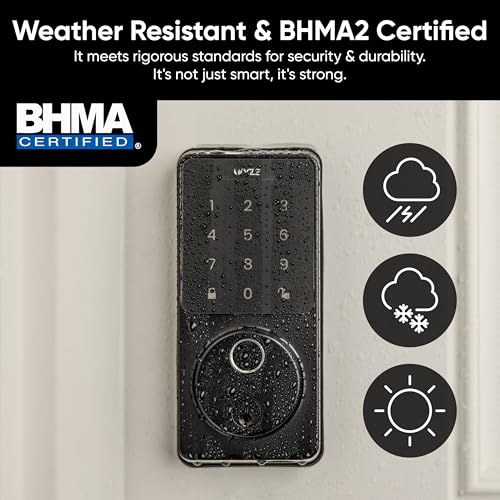
Battery performance is exceptional: eight AA batteries provide approximately eight months of continuous operation, with emergency backup via USB-C charging using any standard power bank. This dual-power approach ensures you’ll never be locked out due to battery depletion—if batteries die, you can temporarily power the lock with a common power bank to unlock and replace batteries. The lock offers total unlock freedom through four methods: fingerprint scanning for speed, Wyze app for remote control, keypad code entry for convenience, and physical backup keys as guaranteed access. Seamless integration with the Wyze ecosystem—particularly the Wyze Video Doorbell—enables visual verification and direct unlock from live video feeds, allowing you to see visitors before granting access. The lock carries BHMA Grade 2 certification and IP53 waterproof rating, ensuring durability and weather resistance.
Best for: Wyze ecosystem users and budget-conscious homeowners prioritizing ultra-fast fingerprint recognition, AI learning, and emergency power backup options.
Pros: Ultra-fast 0.5-second fingerprint unlock; AI learning improves accuracy over time; eight-month battery life with USB-C emergency backup; multiple entry methods; Wyze ecosystem integration; affordable $79 price.
Cons: No customer reviews available; WiFi required for remote access; fingerprint reliability varies with wet or dirty fingers; limited to Wyze ecosystem compatibility; installation difficulty not specified; unclear professional installation requirements.
What Should You Look for When Choosing the Best Smart Lock?
Selecting the right smart lock requires evaluating multiple interconnected factors that balance security requirements, convenience preferences, budget constraints, and smart home ecosystem compatibility. The decision process begins with understanding your specific use case: are you securing a primary residence, managing rental properties, or upgrading a vacation home? Each scenario demands different feature priorities and budget allocations. Primary residence locks prioritize convenience and ecosystem integration, while rental properties benefit from granular guest access management and temporary code capabilities. Vacation homes require reliable remote monitoring and emergency backup access methods.
Authentication Methods and Biometric Technology: Modern smart locks offer multiple authentication approaches, each with distinct advantages and limitations. Fingerprint recognition provides the fastest, most convenient access for household members—look for models with AI learning capabilities that improve accuracy over time and handle variations in fingerprint conditions. Keypad codes offer flexibility for guests and service providers without requiring app downloads or technical proficiency. App-based access enables remote control from anywhere but depends on stable WiFi connectivity and smartphone availability. Voice control through Alexa or Google Home adds hands-free convenience for situations when your hands are full. Physical backup keys remain essential as a failsafe when technology fails. The best smart locks combine at least three authentication methods, providing flexibility and redundancy. According to keypad smart lock reviews, touchscreen keypads with anti-peep technology prevent unauthorized observers from seeing entered codes.
Connectivity and Smart Home Integration: WiFi connectivity fundamentally changes smart lock capabilities, enabling remote access, real-time notifications, and automation integration. Built-in WiFi eliminates the need for separate hub devices, simplifying setup and reducing hardware costs. However, some manufacturers still offer hub-based systems that provide enhanced reliability and broader ecosystem compatibility. Evaluate your WiFi network strength—locks require stable 2.4GHz signals (many modern locks don’t yet support 5GHz). Consider whether the lock integrates with your existing smart home platform: Amazon Alexa users benefit from locks with native Alexa integration, while Apple Home users should verify HomeKit compatibility. Smart lock installation guides detail compatibility requirements and setup procedures for various ecosystems.
Battery Life and Power Management: Battery longevity directly impacts convenience and maintenance requirements. Quality smart locks provide 6-12 months of battery life on standard alkaline batteries, minimizing replacement frequency. Some models feature removable, rechargeable batteries that can be charged via USB-C, eliminating the need to purchase specific battery types. Emergency backup power options—such as USB-C charging ports accepting standard power banks—ensure you maintain access even when batteries are depleted. Low-battery alerts via app notifications prevent unexpected lockouts. Consider your household’s typical usage patterns: heavy traffic through a door depletes batteries faster than occasional access. Evaluate whether the lock’s battery type is readily available at local retailers or requires online ordering. According to power outage guides, quality smart locks maintain mechanical functionality even when batteries fail completely.
Security Certifications and Physical Durability: BHMA (Builders Hardware Manufacturers Association) certification indicates that locks have undergone rigorous third-party testing for security, durability, and finish quality. BHMA Grade 1 represents the highest security rating, typically found on commercial-grade locks, while Grade 2 provides excellent residential security. Grade 3 offers adequate security for lower-traffic areas. Look for locks with encryption protocols protecting access credentials from wireless interception, customizable alarm notifications for forced entry attempts, and tamper detection capabilities. Physical durability matters: fingerprint-resistant touchscreens maintain functionality despite daily handling, while waterproof ratings (IP53 or higher) protect locks in harsh weather conditions. Consider the lock’s material quality—stainless steel and aluminum construction outlast plastic components over years of exposure to temperature fluctuations and moisture.
Installation Requirements and Compatibility: Most smart locks install on standard residential deadbolts without requiring professional installation or door modifications. Verify that the lock fits your door’s thickness (typically 1-3/8 to 2 inches) and backset configuration (2-3/8 or 2-3/4 inches for standard doors). Some specialty doors—like glass, metal, or hollow-core doors—may require alternative mounting solutions or professional installation. Tool-free installation with snap-and-stay designs simplifies the process for DIY homeowners, while others may require basic screwdriver work. Consider whether you’re comfortable with installation or prefer professional assistance. Review the lock’s compatibility with your door frame material and existing deadbolt configuration before purchasing. Front door smart lock reviews provide detailed installation guidance for various door types and configurations.
Budget Considerations and Value Assessment: Smart lock prices range from under $80 to $229, with cost differences reflecting WiFi capabilities, biometric features, and ecosystem integration. Budget-friendly options ($79-$99) deliver core functionality including app control, fingerprint recognition, and voice integration without premium pricing. Mid-range locks ($100-$150) add enhanced features like superior biometric accuracy, longer battery life, and comprehensive ecosystem support. Premium models ($150+) prioritize professional-grade security certification, advanced customization options, and enterprise-scale access management. Evaluate whether premium features justify higher costs for your specific use case. A rental property manager benefits from granular access codes and activity logging, while a single-family home may find budget options sufficient. Consider total cost of ownership: cheaper locks with shorter battery life cost more over time due to frequent battery purchases and replacements.
Access Management and Guest Features: Smart locks shine when managing access for multiple household members, guests, and service providers. Look for locks supporting at least 50-100 unique access codes with granular control options: permanent codes for household members, one-time codes for single-use guest access, or scheduled codes for recurring service providers. Real-time notifications and activity logs provide security transparency, showing exactly who accessed the door and when. Some locks integrate with broader smart home automation—when paired with video doorbells, they enable visual verification before granting access. These features prove especially valuable for rental properties, Airbnb hosts, and homeowners with frequent visitors. Budget smart lock reviews highlight options offering comprehensive access management without premium pricing.
Frequently Asked Questions
How do smart locks work and what makes them secure?
Smart locks replace traditional deadbolt mechanisms with motorized systems controlled via app, keypad, fingerprint, or voice commands. Security relies on encrypted wireless communication preventing credential interception, strong physical construction meeting BHMA standards, and tamper detection triggering alarms. Most quality locks maintain mechanical functionality with backup keys even if batteries fail, ensuring access isn’t lost during power outages. Security guides explain comprehensive protection mechanisms and best practices for maximizing smart lock safety.
Do smart locks work without WiFi or during power outages?
Yes, quality smart locks maintain basic functionality without WiFi or power. Fingerprint, keypad, and physical key entry methods work entirely offline using the lock’s internal battery. App-based remote control requires WiFi and power, but emergency USB-C charging ports allow temporary powering via standard power banks. Power outage guides detail exactly how different lock types maintain functionality during emergencies and network failures.
How long do smart lock batteries last and what happens when they die?
Battery life typically ranges from six to twelve months depending on usage frequency and lock model. Most locks provide low-battery alerts via app notifications before depletion. When batteries die, physical keys and backup power methods maintain access. Premium models include USB-C emergency charging ports accepting standard power banks, allowing temporary powering to unlock doors. Always keep backup keys accessible and verify the lock’s emergency access procedures before relying on it exclusively.
Can smart locks integrate with voice assistants like Alexa and Google Home?
Most modern smart locks support Alexa and Google Home integration, enabling voice-controlled lock and unlock commands. Integration quality varies: some locks offer native compatibility for faster response times, while others require third-party apps or automation routines. Verify specific compatibility before purchasing, as ecosystem support differs across manufacturers. Some locks require pairing with companion hubs or apps to enable voice control functionality.
Are smart locks compatible with rental properties and temporary guest access?
Absolutely—smart locks excel at managing rental properties through temporary access codes. Create one-time codes for individual guests, scheduled codes for recurring service providers, or permanent codes for property managers. Real-time activity logs show exactly when guests accessed the property. This eliminates physical key distribution, reduces locksmith costs for rekeying, and provides complete transparency over property access. Many property managers prefer smart locks specifically for these rental management capabilities.
What’s the difference between WiFi, Bluetooth, and keypad-only smart locks?
WiFi-enabled locks offer remote access from anywhere via app, real-time notifications, and smart home automation integration—ideal for primary residences and property management. Bluetooth locks provide close-range control without WiFi dependency but limit remote access to nearby smartphone users. Keypad-only locks eliminate wireless technology entirely, reducing security risks but sacrificing remote monitoring and app convenience. Each approach offers different security and convenience trade-offs depending on your specific needs.
Which Smart Lock Should You Buy?
Selecting the best smart lock requires matching your specific security needs, budget constraints, and smart home preferences to the right model. The Schlage Encode Smart WiFi Deadbolt remains the top choice for homeowners prioritizing professional-grade security and comprehensive remote access capabilities. Its BHMA highest-rating certification, 100-access-code capacity, and seamless Alexa/Google Home integration make it ideal for multi-property owners, complex households, and security-conscious homeowners willing to invest in premium features. The built-in WiFi eliminates hub requirements, and the six-month battery life with low-battery alerts prevents unexpected lockouts. While the $229 price tag exceeds budget alternatives significantly, the investment pays dividends through enhanced security, remote monitoring capabilities, and ecosystem flexibility that justify premium pricing for discerning homeowners.
For budget-conscious shoppers seeking excellent value without compromising core features, the Philips Wi-Fi Door Lock delivers fingerprint recognition, app control, voice integration, and 100-custom-passcode management at a fraction of premium pricing. The auto-lock feature, real-time notifications, and multiple unlock methods provide security transparency and household flexibility comparable to significantly more expensive models. The primary trade-off involves 2.4GHz WiFi-only support and battery inclusion responsibility, but these minor limitations don’t substantially diminish the lock’s appeal for budget-conscious homeowners upgrading from traditional deadbolts.
The eufy Security Smart Lock C220 offers the sweet spot between budget and premium features, combining self-learning fingerprint AI, eight-month battery life, and six unlock methods with seamless eufy ecosystem integration. If you already own eufy doorbells or plan building an eufy smart home, this lock’s ecosystem compatibility and AI-powered biometric accuracy make it an excellent choice. The no-hub-required WiFi connectivity and comprehensive customer service support provide peace of mind that justifies the modest price increase over the Philips model.
The Tapo Smart Wi-Fi Door Lock DL110 appeals to technology enthusiasts prioritizing fastest fingerprint recognition (0.42 seconds) and longest battery life (12 months). The USB-C rechargeable battery eliminates disposable battery purchases entirely, and the granular guest access management with scheduled codes benefits property managers and Airbnb hosts. This model represents the best option for tech-savvy users who value cutting-edge biometric performance and comprehensive access control capabilities.
The Wyze Auto-Lock Bolt v2 combines ultra-fast 0.5-second fingerprint unlock, AI learning, and emergency USB-C power backup at an accessible $79 price point. Wyze ecosystem users—particularly those with Wyze Video Doorbells—benefit from integrated visual verification and direct unlock from live video feeds. This model delivers exceptional value for budget-conscious homeowners seeking speed, learning capability, and ecosystem flexibility without premium pricing.
Final Verdict by Use Case:
- Best Overall Security: Schlage Encode Smart WiFi Deadbolt—BHMA highest-rating, 100 access codes, professional-grade encryption.
- Best Budget Option: Philips Wi-Fi Door Lock—$109.98, fingerprint recognition, voice control, auto-lock feature.
- Best Ecosystem Integration: eufy Security Smart Lock C220—AI learning, eight-month battery, seamless eufy ecosystem compatibility.
- Best Biometric Performance: Tapo Smart Wi-Fi Door Lock DL110—0.42-second recognition, 12-month battery, USB-C charging.
- Best Wyze Users: Wyze Auto-Lock Bolt v2—0.5-second unlock, AI learning, emergency power backup, video doorbell integration.
Regardless of your choice, smart locks represent significant security and convenience upgrades over traditional deadbolts. Modern smart locks combine multiple authentication methods, long battery life, and ecosystem flexibility to accommodate diverse household needs and preferences. Whether you prioritize remote monitoring, biometric speed, budget accessibility, or ecosystem integration, the September 2026 smart lock market offers excellent options at various price points. Evaluate your specific use case, verify WiFi compatibility and door measurements, and select the model best matching your security requirements and household preferences. Most quality smart locks install in under 15 minutes without professional assistance, making the upgrade process straightforward for DIY homeowners.






Write Your Review
No reviews yet. Be the first to share your experience!