

How Does Smart EV Charging Based on Time-of-Use Rates Work in 2026?
Smart EV charging based on time-of-use rates automatically schedules your vehicle’s charging during cheaper electricity periods, typically saving 30-50% on charging costs. The system connects to your utility company’s dynamic pricing data and charges your electric vehicle when rates are lowest—usually during off-peak hours like late night or early morning. By leveraging real-time rate information, smart charging algorithms determine the optimal charging window while ensuring your battery reaches the desired charge level before you need to drive. This technology has become essential infrastructure in 2026 as utilities nationwide implement advanced rate structures to manage grid demand and encourage renewable energy adoption. The integration with smart home platforms means your EV charger communicates with home energy management systems, allowing coordinated charging that works alongside solar production, battery storage, and household consumption patterns. Most smart chargers in 2026 support two-way communication with the grid through protocols like OpenADR and are increasingly compatible with the Matter protocol for enhanced device interoperability. Understanding how these systems calculate savings and what infrastructure you need is crucial for maximizing your investment in EV charging technology.
What Are the Key Components of a Smart Time-of-Use EV Charging System?
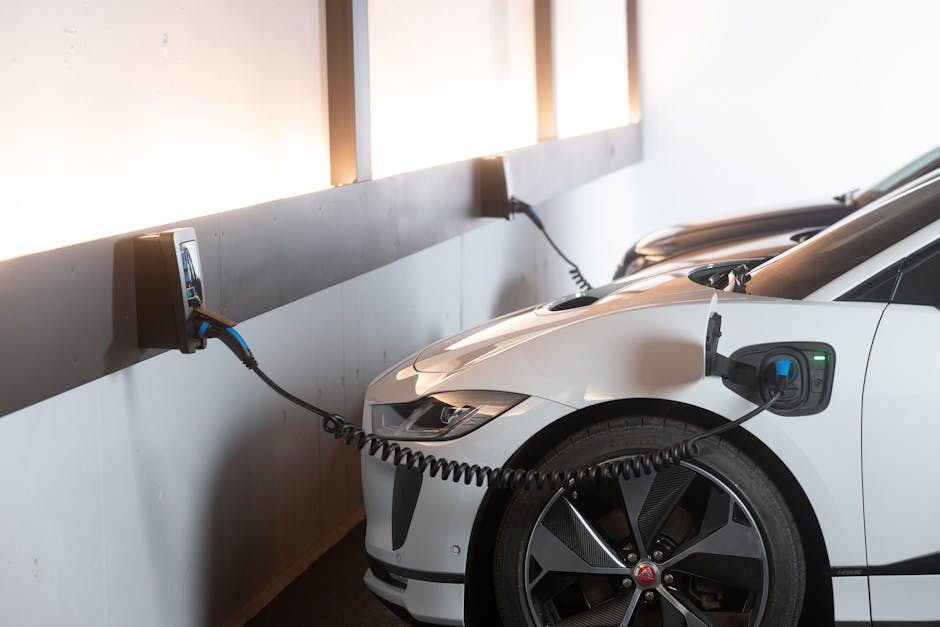
A complete smart EV charging system in 2026 requires several interconnected components working together seamlessly. The foundation is a smart EV charger capable of communicating with utility networks and your home automation system. These chargers must support variable charging rates and have embedded intelligence to receive pricing signals and adjust power delivery accordingly. Your utility company’s rate schedule data feeds into the system—most utilities now provide real-time or day-ahead pricing through APIs that smart chargers can access directly. A home energy management system serves as the central intelligence hub, analyzing your utility rates, vehicle charging needs, driving patterns, and household energy consumption to make optimization decisions. Smart home energy management systems have become increasingly sophisticated in 2026, offering predictive algorithms that forecast charging needs days in advance. Your vehicle’s battery management system must communicate charging status and capacity to the charger and home system. Finally, a mobile app or web dashboard lets you set charging preferences, review savings, and override automatic scheduling when needed. The integration between these components determines how effectively your system captures savings—poorly integrated systems may miss opportunities or fail to respond to rapid rate changes. Most modern systems in 2026 use cloud-based platforms that securely store your data while enabling remote monitoring and updates.
Smart EV Charger Hardware Requirements
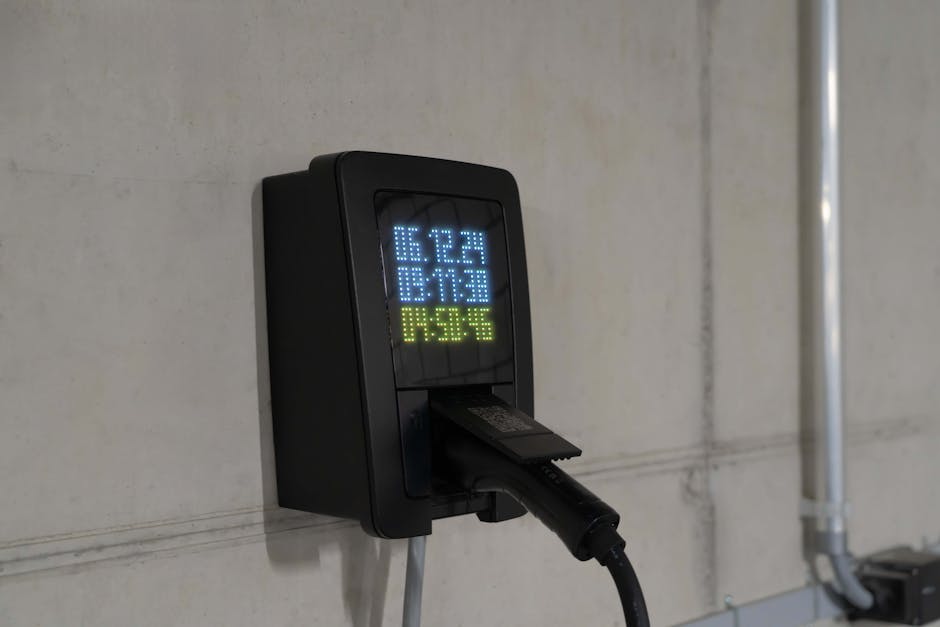
Your charger must be Level 2 (240V) or Level 3 (DC fast charging) capable with built-in communication modules. Level 2 chargers are most common for residential installations and provide 7-19 kW of power, sufficient for overnight charging. The charger needs internet connectivity—either hardwired Ethernet or Wi-Fi—to receive rate signals and send usage data. Look for chargers with OCPP (Open Charge Point Protocol) certification, which ensures compatibility with various utility networks and aggregation platforms. The charger should display real-time pricing information and allow customization of charging parameters. In 2026, many chargers include battery storage integration capabilities, allowing them to work with home backup batteries or vehicle-to-home (V2H) systems. Installation typically requires a licensed electrician and may involve panel upgrades if your home’s electrical service is limited. Expect installation costs between $500-$2,500 depending on your existing electrical infrastructure and charger model selection.
Utility Rate Data Integration
Your smart charging system must access your utility’s pricing schedule in real-time or near-real-time. Most utilities in 2026 offer time-of-use rates with 2-4 pricing tiers throughout the day. Some utilities provide day-ahead pricing, revealing rates 24 hours in advance, which allows optimal scheduling. Others use real-time pricing that changes hourly or every 15 minutes based on grid conditions. Your charger needs API access to this data—either directly from the utility or through an aggregation platform that consolidates rates from multiple utilities. Some utilities automatically enroll EV owners in time-of-use programs, while others require opt-in. Understanding your specific utility’s rate structure is essential for maximizing savings. Peak rates typically occur during 4-9 PM on weekdays when demand is highest, while off-peak rates occur late night through early morning. Shoulder rates during mid-day provide a middle ground. Your smart system learns these patterns and schedules charging accordingly, often achieving 40-50% savings compared to flat-rate charging during peak hours.
How Much Money Can You Save with Smart EV Charging in 2026?
Actual savings from smart EV charging based on time-of-use rates vary significantly based on your utility’s rate structure, local electricity prices, and driving patterns. In regions with aggressive time-of-use pricing like California or the Northeast, typical savings range from $1,500-$3,000 annually for average EV owners. A vehicle charging 40 kWh daily (typical for many EVs) could cost $4.80 per day during peak rates ($0.12/kWh) versus $2.40 during off-peak rates ($0.06/kWh)—a daily savings of $2.40 or $876 annually just from basic shift to off-peak hours. More sophisticated optimization using predictive algorithms and coordination with home solar or battery storage can increase savings to $3,000-$5,000 annually for homeowners in optimal conditions. The payback period for a smart charger ($800-$2,000) typically ranges from 6-24 months depending on your utility rates and driving habits. Additional savings come from reduced demand charges if your utility applies them—smart charging prevents simultaneous high-load activities that trigger expensive demand fees. In 2026, many utilities offer rebates and incentives for smart charger installation, effectively reducing your upfront cost by 50-75%. Federal tax credits may also apply in your jurisdiction. The long-term value extends beyond direct savings: reduced peak demand helps utilities avoid costly infrastructure upgrades, supporting lower rates for all customers while reducing grid strain and enabling greater renewable energy integration.
Typical Rate Structures in 2026
Most utilities now offer three common time-of-use structures. Standard TOU has two tiers: peak (typically 4-9 PM weekdays) at $0.18-$0.28/kWh and off-peak ($0.06-$0.12/kWh) covering remaining hours. Extended TOU adds a shoulder rate ($0.12-$0.18/kWh) during mid-day and early evening. Advanced utilities implement real-time pricing where rates change hourly based on grid conditions, potentially dropping to $0.02-$0.04/kWh during very low-demand periods or rising to $0.40+/kWh during emergencies. Your smart charger optimizes differently for each structure. With standard TOU, the strategy is simple—charge during off-peak only. With real-time pricing, sophisticated algorithms predict the lowest-cost charging windows and may split charging across multiple periods. Some utilities offer special EV rates that provide even deeper discounts (50-70% below peak rates) during specific windows. Understanding your specific rate structure is crucial—reviewing your utility bill or contacting customer service reveals your exact rates and peak/off-peak windows. Many utilities have changed their TOU schedules in 2026 to reflect evolving solar production patterns and grid conditions.
Factors Affecting Your Savings
Your actual savings depend on several variables beyond the rate difference. Daily driving distance determines how much charging you need—someone driving 10 miles daily has much lower charging costs than someone driving 50 miles. Vehicle efficiency (measured in kWh/mile) varies significantly: luxury EVs might use 0.25 kWh/mile while efficient models use 0.15 kWh/mile. Your home’s existing electricity consumption patterns matter—if you already run major appliances during off-peak hours, you’re capturing most available savings, while homes with flexible loads have more optimization potential. Climate affects efficiency: cold weather reduces EV range and increases charging needs, while mild climates allow less frequent charging. Your utility’s rate spread—the difference between peak and off-peak rates—determines maximum possible savings. Utilities with 3:1 rate ratios (peak three times off-peak) offer more savings than those with 1.5:1 ratios. Home solar production creates additional optimization opportunities: smart systems can time charging to match solar generation, reducing reliance on grid electricity entirely. Battery storage systems amplify these benefits by allowing charging during peak solar production for later use. Your ability to shift charging times flexibly affects savings—someone with a predictable commute captures more savings than someone with variable driving patterns.
How Do You Implement Smart EV Charging Based on Time-of-Use Rates in Your Home?
Implementing smart EV charging requires a systematic approach starting with utility assessment and ending with optimization fine-tuning. First, contact your utility company to understand available rate programs and verify that smart EV charging is supported in your area. Many utilities require you to enroll in time-of-use programs or switch from flat-rate plans. Request documentation of your specific rate schedule, peak/off-peak windows, and any available EV incentives or rebates. Next, assess your electrical infrastructure—have a licensed electrician evaluate your home’s service panel, available capacity, and the optimal charger location. Most homes need a dedicated 240V circuit; some may require panel upgrades costing $500-$1,500. Research charger options that support your vehicle and utility network. Priority features include OCPP certification, Wi-Fi/Ethernet connectivity, mobile app control, and integration with your home automation system. Popular options in 2026 include chargers from established EV manufacturers and specialized charging companies. Review your home’s existing smart home setup—if you already use a smart home energy management system, choose a charger compatible with that platform. Installation should be performed by a licensed electrician following local electrical codes. After installation, configure the charger’s network settings and connect it to your utility’s rate program. Set your charging preferences in the mobile app: desired charge level, charging windows, and any vehicle-specific parameters. Most systems offer “eco mode” that automatically optimizes charging based on rates—enable this for passive savings without daily input. Monitor your first month of charging to understand actual savings and adjust settings if needed. Many chargers provide detailed usage reports showing cost per charge and comparing your savings to peak-rate charging. Use this data to refine your settings and identify optimization opportunities.
Step-by-Step Installation Process
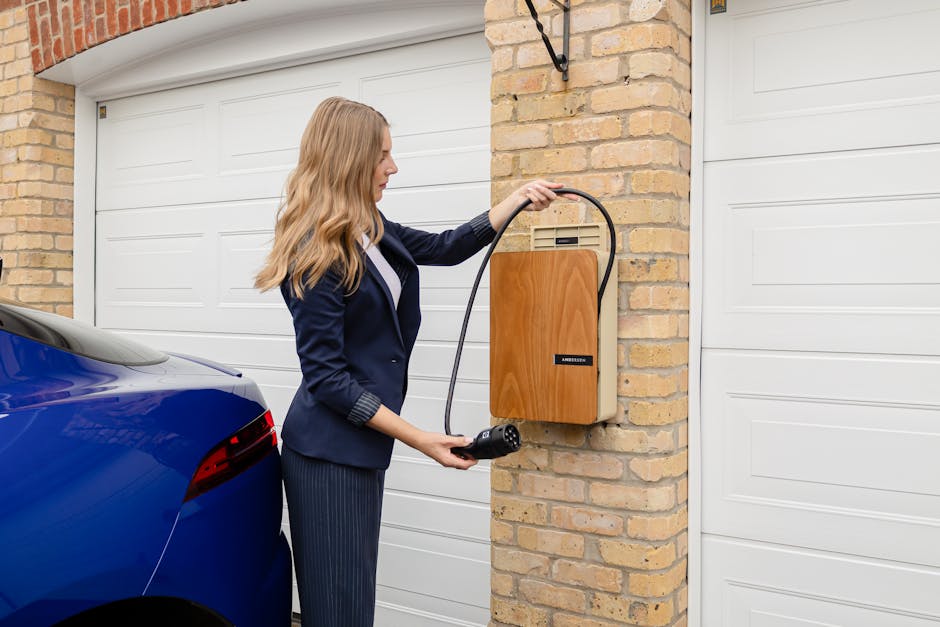
Begin by scheduling an electrical inspection with a licensed electrician who understands EV charger installation. They’ll assess your home’s electrical panel, available capacity, grounding, and optimal charger location. Most residential installations require a dedicated 40-60 amp circuit at 240V; some homes may need service upgrades. Once the electrician confirms feasibility and provides a cost estimate, order your smart charger. Installation typically takes 2-4 hours for standard setups, longer if electrical work is required. The electrician will run conduit from your panel to the charger location, install the circuit breaker, and complete all connections according to code. After physical installation, the electrician should verify proper operation and grounding. Next, you’ll configure the charger’s network connectivity—connect it to your home Wi-Fi or hardwired Ethernet. Download the charger manufacturer’s app and create an account. Link the charger to your vehicle’s account (most EV manufacturers provide integration). Contact your utility to enroll in their time-of-use program and provide your charger’s identification information for rate signal communication. Many utilities can remotely enable smart features on compatible chargers. Test the system by initiating a charge and verifying that rate information displays correctly in the app. Set your preferred charging parameters: target charge level, charging start/stop times, and eco mode preferences. Allow the system to run for 1-2 weeks in manual mode to understand your utility’s rate patterns before enabling full automation. Finally, enable automatic optimization and monitor the app daily for the first month to ensure the system performs as expected.
Optimizing Your Charging Strategy
Once your system is operational, several optimization strategies maximize savings. First, understand your vehicle’s charging curve—most EVs charge fastest at 20-80% state of charge, then slow dramatically. Schedule charging to reach your target level during the cheapest rate window, avoiding overnight charging if your rates don’t remain low until morning. Use your charger’s scheduling features to set specific start times aligned with off-peak periods. If your utility offers day-ahead pricing, plan your charging the evening before based on next day’s rates. For real-time pricing structures, enable predictive algorithms that automatically adjust to rate changes. Coordinate EV charging with other household electricity use—avoid simultaneous operation of major appliances like water heaters, clothes dryers, or air conditioning during peak hours. If you have excess solar production available for EV charging optimization, time your charging to match peak solar generation (typically 10 AM-3 PM). This requires integration between your solar system and charger, often through a home energy management platform. If you have home battery storage, charge your EV during lowest-rate periods when grid electricity is cheapest, potentially using stored solar energy from earlier in the day. Monitor your charging patterns monthly—the app should show cost per kWh and total monthly savings. Adjust your target charge levels based on your actual driving needs; charging to 80% instead of 100% reduces charging time and cost. During summer months when rates may differ, review your utility’s seasonal schedules and adjust your charging times accordingly. Some utilities offer special “super off-peak” rates during specific hours or days—if available, prioritize charging during these windows. Finally, stay informed about utility rate changes—most utilities announce changes quarterly or annually. When rates change, update your charging strategy to capture new optimization opportunities.
Integrating with Home Energy Systems
Smart EV charging achieves maximum value when integrated with your broader home energy ecosystem. If you have home energy monitors that track solar production, connect them to your charger’s management system. This allows the system to time EV charging to match solar generation, effectively charging your vehicle at near-zero cost during peak production hours. For homes with battery storage systems, implement energy management logic that charges batteries during lowest-rate periods, then uses stored energy to charge your EV or power your home during peak rates. This multi-layer optimization can reduce overall electricity costs by 40-60% compared to standard charging. If you use geofencing technology for home automation, integrate it with your charger to automatically initiate charging when you arrive home during off-peak hours. This eliminates manual scheduling for predictable commutes. Connect your EV charger to your home’s central energy management platform (if available) to enable coordinated load management. The system can prevent simultaneous operation of high-draw devices, keeping your total household demand below levels that trigger expensive demand charges. Many utilities in 2026 offer demand response programs where they provide additional incentives for reducing consumption during critical peak periods—your smart charger can participate automatically, delaying charging by a few hours in exchange for bill credits. Finally, if you plan to add solar panels or battery storage in the future, choose a charger with V2H (vehicle-to-home) or V2G (vehicle-to-grid) capability, even if you don’t use these features immediately. This future-proofs your investment as your home energy system evolves.
What Are Common Mistakes When Using Smart EV Charging Based on Time-of-Use Rates?
Many EV owners fail to capture the full savings potential from smart charging due to preventable mistakes. The most common error is not enrolling in your utility’s time-of-use program—some owners purchase smart chargers but continue on flat-rate plans, eliminating the primary benefit. Verify enrollment with your utility and request confirmation that your account is on the correct rate plan. Another frequent mistake is setting unrealistic charging targets. Owners often charge to 100% daily even when their driving needs only require 60-70% capacity. Charging to higher levels increases charging time and cost while degrading battery longevity. Most EV manufacturers recommend keeping daily charge targets between 70-80% for optimal battery health and cost efficiency. Many owners also ignore their charger’s app and mobile notifications, missing opportunities to adjust charging times when rates change unexpectedly. Dedicate 5-10 minutes weekly to reviewing your charging app and adjusting settings based on rate updates. Some installations fail because owners don’t account for utility communication requirements—ensure your charger can receive rate signals from your utility through either direct API connection or aggregation platform integration. Improper scheduling is another issue: setting charging to begin too early in the off-peak window means the vehicle finishes charging before peak rates end, wasting the off-peak advantage. Calculate your charging time needed (battery capacity divided by charger power output) and schedule accordingly to finish just before peak rates begin. Owners with home solar systems often make the mistake of not integrating their charger with solar monitoring systems, missing the opportunity to charge during peak solar production. Finally, many people don’t monitor their actual savings, so they can’t verify that the system is working correctly. Check your utility bill monthly and compare charging costs to what you’d pay on a standard rate—if savings are significantly lower than expected, contact your utility or charger manufacturer to troubleshoot integration issues.
What Technology Trends Are Shaping Smart EV Charging in 2026?
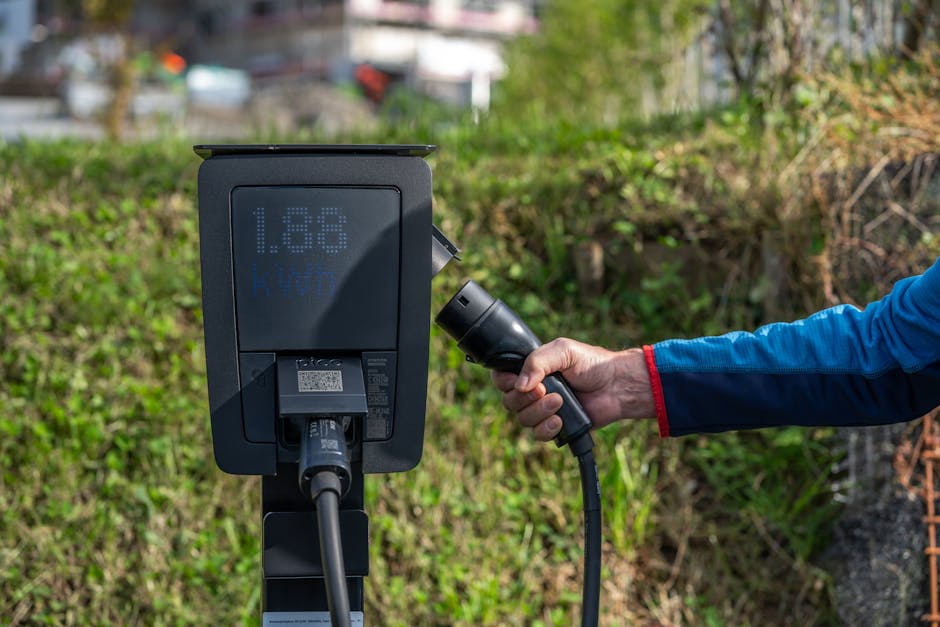
The smart EV charging landscape in 2026 is evolving rapidly with several transformative technologies reshaping how systems operate. Vehicle-to-Grid (V2G) technology is becoming mainstream, allowing bidirectional power flow where EVs can discharge stored energy back to the home or grid during peak rates. This capability transforms your EV from a consumer of electricity to a distributed energy resource, potentially increasing annual savings by 30-40%. Grid operators increasingly use V2G-capable vehicles to stabilize the grid during peak demand, with owners receiving compensation for participation. Artificial intelligence and machine learning algorithms are becoming standard in smart charging systems, moving beyond simple time-based scheduling to predictive optimization. These systems learn your driving patterns, weather conditions, and grid conditions to forecast optimal charging times days in advance. Integration with 5G networks is improving smart home device responsiveness for EV chargers, enabling real-time communication with utilities and faster response to rate changes. The Matter protocol is impacting EV charger compatibility significantly in 2026, with manufacturers adopting this standard to ensure interoperability across different ecosystems. This reduces vendor lock-in and allows consumers to integrate chargers with any compatible smart home platform. Blockchain technology is emerging for transparent, decentralized energy trading, allowing peer-to-peer electricity sales and more granular rate structures. Battery storage costs continue declining, making home battery systems more economically viable alongside EV chargers. Many new installations in 2026 include integrated battery storage for maximum cost optimization. Utility demand response programs are becoming more sophisticated, offering dynamic pricing that changes hourly or even every 15 minutes based on real-time grid conditions. Smart chargers must handle this complexity through advanced algorithms. Finally, vehicle-to-home (V2H) technology is becoming standard on new EV models, enabling your vehicle to power your home during outages or peak rate periods, effectively turning your EV into a mobile power plant for your household.
Is Smart EV Charging Based on Time-of-Use Rates Worth It in 2026?
Smart EV charging based on time-of-use rates is absolutely worth implementing in 2026 if your utility offers time-of-use programs and you have reasonable charging flexibility. The return on investment is compelling: a $1,500 smart charger pays for itself in 12-18 months through electricity savings alone, with 15+ years of useful life remaining. Over the charger’s lifetime, you’ll save $15,000-$30,000 in electricity costs depending on your driving patterns and utility rates. Beyond direct savings, smart charging provides environmental benefits by shifting your consumption to periods when renewable energy is abundant and grid demand is lowest. This reduces overall grid emissions and supports the transition to clean energy. The technology also offers convenience benefits: automatic optimization eliminates the need for manual scheduling, and mobile apps provide transparency into your energy consumption and costs. For environmentally conscious consumers, smart charging aligns their EV usage with renewable energy availability, maximizing the environmental benefit of their vehicle choice. The technology is increasingly becoming standard rather than premium—many new chargers include smart features at minimal cost premium over basic models. Utility incentives and rebates further improve the economics, often covering 50-75% of installation costs. However, smart EV charging is only worthwhile if your utility offers time-of-use rates. If you’re on a flat-rate plan, a basic charger provides all necessary functionality at lower cost. Additionally, if your driving is highly unpredictable or you frequently need rapid charging, the optimization opportunities are limited. Consider your specific situation: predictable driving patterns, access to time-of-use rates, and flexibility to charge during off-peak hours are essential for capturing maximum value. For the majority of EV owners in 2026 with these characteristics, smart EV charging represents one of the highest-ROI home energy investments available, rivaling or exceeding the value of solar panels or battery storage for pure financial return. Combined with other smart home technologies like smart home energy management systems and smart plugs that save money on electric bills, smart EV charging creates a comprehensive strategy for minimizing electricity costs while supporting grid stability and renewable energy integration. The technology continues improving in 2026 with better algorithms, broader utility support, and enhanced interoperability, making this an ideal time to implement smart charging if you own or plan to purchase an electric vehicle.
Frequently Asked Questions
What is the difference between a smart charger and a regular EV charger?
A smart charger communicates with your utility and home energy system to optimize charging timing based on electricity rates and household demand. Regular chargers lack this communication capability and charge whenever plugged in, missing cost-saving opportunities. Smart chargers typically cost $200-$400 more but save that difference in 6-12 months through reduced electricity costs.
Do all utilities support smart EV charging in 2026?
Most major utilities now support smart EV charging, but availability varies by region. Contact your utility to confirm time-of-use rate availability and smart charger compatibility. Some rural utilities may not yet offer these programs, though adoption is expanding rapidly nationwide throughout 2026.
Can you use smart EV charging with solar panels?
Yes, smart chargers integrate excellently with solar systems. You can schedule charging to match peak solar production (typically 10 AM-3 PM), effectively charging your vehicle with free solar energy. This combination often reduces your electricity costs by 50-70% compared to standard grid charging.
What happens if you need to charge during peak rate hours?
Smart chargers allow manual override for emergency situations. While charging during peak hours costs more, you can initiate immediate charging if needed. Most systems encourage off-peak charging through app notifications but don’t prevent peak-hour charging when necessary for your driving needs.
How much electricity does an EV use per month?
Average EV consumption is 25-35 kWh daily, or 750-1,050 kWh monthly. This varies by vehicle efficiency, driving distance, and climate. At $0.12/kWh average rates, expect $90-$126 monthly charging costs, reduced to $45-$63 with smart time-of-use charging during off-peak periods.
Is a smart charger required for vehicle-to-home (V2H) functionality?
Yes, V2H capability requires a bidirectional smart charger and compatible vehicle. Not all EVs or chargers support V2H in 2026, though adoption is increasing. Check your vehicle’s specifications and charger compatibility before assuming V2H availability for your installation.









Write Your Review
No reviews yet. Be the first to share your experience!