
How Does 5G Transform Smart Home Device Responsiveness in 2026?
5G networks have fundamentally revolutionized smart home device responsiveness by reducing latency from 50-100 milliseconds on 4G to as low as 1-10 milliseconds, enabling near-instantaneous device control and automation. The key takeaway: 5G delivers the ultra-low latency and massive bandwidth necessary for real-time smart home interactions, making voice commands, security alerts, and automated routines respond in milliseconds rather than seconds. In May 2026, widespread 5G adoption across urban and suburban areas has created an environment where smart home ecosystems can operate with unprecedented speed and reliability. This transformation extends beyond simple convenience—it fundamentally changes how smart homes function, enabling simultaneous multi-device control, complex automation sequences, and AI-powered predictive actions that were previously impossible. The enhanced responsiveness also improves security system reaction times, allowing threat detection and response protocols to execute in real-time rather than experiencing the delays characteristic of earlier wireless standards.
The shift to 5G represents the most significant wireless infrastructure upgrade for smart homes since the introduction of WiFi. While previous generations prioritized bandwidth and coverage, 5G specifically optimizes for low latency and ultra-reliable connectivity. This distinction matters profoundly for smart home applications where millisecond-level delays can mean the difference between seamless automation and noticeable lag. By 2026, most major metropolitan areas have achieved 5G coverage, and device manufacturers have optimized their hardware to leverage these capabilities. The combination of improved network infrastructure and purpose-built smart home devices creates a ecosystem where responsiveness is no longer a limitation but a feature advantage.
What Are the Technical Advantages of 5G for Smart Home Devices?
5G technology provides three primary technical advantages that directly enhance smart home device responsiveness: ultra-low latency (URLLC), massive machine-type communications (mMTC), and enhanced mobile broadband (eMBB). Ultra-low latency ensures that commands sent from a smartphone, voice assistant, or automation hub reach their destination and execute within milliseconds. Massive machine-type communications allows thousands of devices to connect simultaneously without network congestion, which proves essential for homes with 50+ connected devices. Enhanced mobile broadband delivers gigabit-class speeds that enable rapid data transfer for video feeds, firmware updates, and cloud synchronization.

Latency Reduction and Real-Time Control
The most dramatic improvement 5G brings to smart homes is latency reduction. A voice command to dim lights or adjust thermostat settings now completes in under 50 milliseconds on 5G networks, compared to 100-300 milliseconds on 4G LTE. This reduction eliminates the perceptible delay that frustrated users with earlier smart home systems. Security cameras transmit live feeds with minimal lag, enabling real-time monitoring and threat response. Smart locks unlock doors instantly when users approach, rather than requiring 1-2 second waits. These seemingly small improvements compound across dozens of daily interactions, creating a fundamentally more responsive living environment.
Bandwidth and Device Density
5G networks support 1 million connected devices per square kilometer, compared to 100,000 devices on 4G networks. This theoretical capacity translates to practical benefits for smart homes with numerous devices. Multiple devices can transmit simultaneously—security cameras streaming, smart speakers processing voice commands, environmental sensors reporting data, and automation routines executing—without network bottlenecks. In 2026, homes with 100+ connected devices no longer experience the network congestion that previously caused intermittent connectivity and delayed responses. The bandwidth capacity also enables higher quality video streaming from security cameras and faster cloud synchronization for backup and analytics.
Network Reliability and Failover
5G networks provide 99.99% availability rates with automatic failover mechanisms. When a 5G signal weakens, devices seamlessly transition to backup connectivity without user awareness. This reliability proves critical for security systems, health monitoring devices, and critical automation routines. Unlike earlier wireless standards where network outages could disable entire smart home systems, 5G’s redundancy ensures continuous operation. The improved reliability also reduces the need for local processing fallbacks, allowing more intelligence to reside in cloud services and edge computing nodes.
How Has 5G Improved Specific Smart Home Device Categories by 2026?
Different smart home device categories have experienced distinct responsiveness improvements through 5G adoption. Security systems, environmental controls, and entertainment devices have each leveraged 5G’s capabilities in unique ways, creating measurable performance enhancements that reshape how homeowners interact with their living spaces.

Security and Access Control Devices
Smart locks, video doorbells, and security cameras have experienced the most dramatic responsiveness improvements. Video doorbell feeds now load in under 1 second on 5G networks, compared to 3-5 seconds previously. Users can unlock doors remotely with confidence, knowing the action completes within milliseconds. Security systems detect intrusions and trigger alarms in real-time rather than experiencing the 2-5 second delays that previously allowed intruders additional escape time. Motion-activated lighting responds instantly to movement, eliminating the lag that made earlier systems feel less responsive. Smart home energy dashboards can now monitor security devices alongside energy metrics without performance degradation.
Climate Control and Environmental Systems
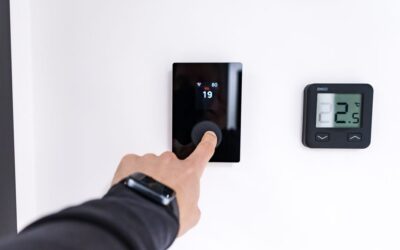
Smart thermostats, ventilation systems, and environmental sensors now adjust settings in real-time based on sensor inputs and user commands. A user can change thermostat settings via voice command and feel the temperature adjustment begin within seconds rather than minutes. Geofencing-based heating and cooling optimization now works with millisecond precision, pre-conditioning homes before occupants arrive. Environmental sensors monitoring air quality, humidity, and temperature can trigger immediate automated responses without the lag that previously made reactive systems feel sluggish. These improvements directly enhance comfort while supporting energy efficiency goals.
Voice Assistants and Smart Speakers
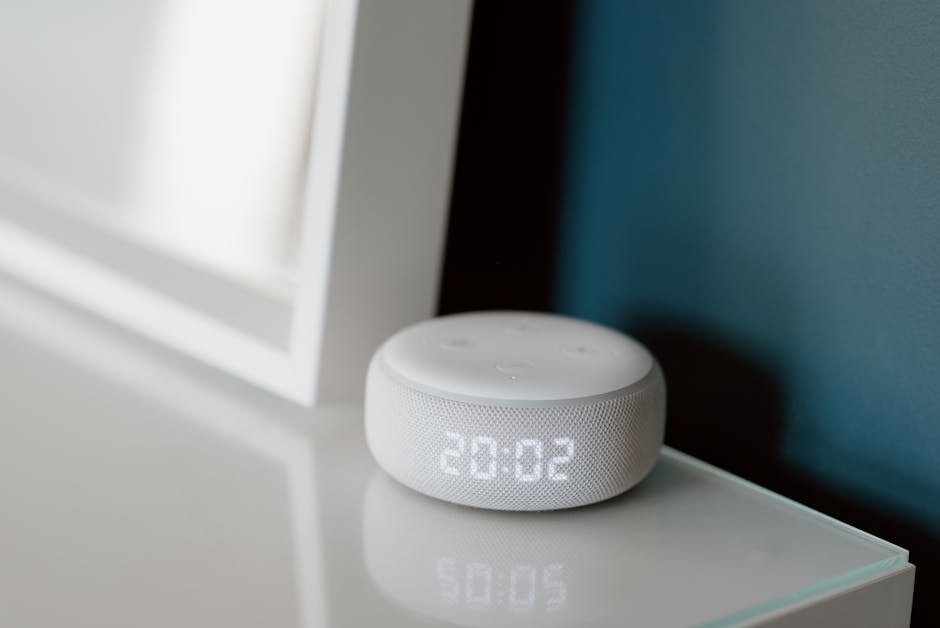
Voice assistants respond to commands in under 500 milliseconds on 5G networks, creating conversational experiences previously impossible on 4G. Users can issue rapid-fire commands without waiting for responses, enabling complex multi-step automations through natural speech. Smart speakers maintain constant cloud connectivity without the buffering or disconnection issues that plagued earlier devices. Music streaming through smart speakers experiences zero latency, with synchronized playback across multiple rooms now reliably achievable.
How Do You Optimize Smart Home Devices for Maximum 5G Responsiveness?
While 5G networks provide the infrastructure for improved responsiveness, device configuration and network optimization determine whether homes actually achieve these theoretical benefits. Homeowners and integrators must implement specific strategies to ensure their smart home ecosystems fully leverage 5G capabilities. By May 2026, best practices have emerged from early adopters and industry leaders, providing a roadmap for optimizing smart home responsiveness.

Network Configuration and Device Placement
5G signal strength varies significantly based on device location, building materials, and network congestion. Smart home devices should be positioned to maintain strong 5G signals, typically within line-of-sight of 5G towers or relay points. For devices requiring wall-mounted installation (security cameras, motion sensors), placement should prioritize signal strength over aesthetic preferences. Network testing tools available in 2026 allow homeowners to map 5G coverage within their homes and identify dead zones requiring alternative connectivity solutions. Devices in poor 5G areas should fall back to reliable WiFi 6 networks rather than relying on degraded 5G signals. Mesh WiFi 6 systems coordinated with 5G connectivity create redundant pathways that ensure consistent responsiveness regardless of individual network performance.
Device Firmware and Software Updates
Smart home device manufacturers have released firmware updates throughout 2025 and 2026 that optimize 5G connectivity and reduce latency. Devices running outdated firmware may not fully leverage 5G capabilities, experiencing responsiveness improvements of only 20-30% instead of potential 70-90% gains. Homeowners should enable automatic firmware updates on all smart devices, ensuring they benefit from latest optimization. Cloud services supporting smart homes have also been optimized for 5G latency profiles, so devices connected to updated cloud services experience superior responsiveness. Regular firmware audits—checking that all devices run current versions—ensure consistent performance across the entire ecosystem.
Cloud vs. Local Processing Decisions
5G’s low latency enables effective cloud-based processing for smart home automation, but local processing still offers advantages for critical functions. Security systems, emergency alerts, and basic automation routines should execute locally on hubs or edge devices, ensuring functionality even if cloud connectivity temporarily fails. Non-critical features—advanced analytics, machine learning predictions, remote access—can safely rely on cloud processing through 5G networks. This hybrid approach maximizes responsiveness while maintaining reliability. Homeowners should configure automation routines to prioritize local execution for time-sensitive actions and cloud execution for complex decision-making.
Network Prioritization and Quality of Service
5G networks support quality-of-service (QoS) configurations that prioritize specific traffic types. Smart home automation commands should receive high priority, ensuring they execute before less-critical data transfers. Security system alerts should receive highest priority, guaranteeing immediate notification regardless of network congestion. Video streaming and cloud backups should receive lower priority, allowing them to adapt to available bandwidth without impacting critical functions. By 2026, most network providers support QoS configuration through customer portals or apps. Homeowners should implement QoS settings that match their smart home priorities, ensuring the most important functions always receive adequate bandwidth and low latency.
Integration with Existing Smart Home Protocols
5G works alongside existing smart home protocols like Matter protocol, which standardizes device communication and improves interoperability. Devices supporting Matter protocol can leverage 5G’s capabilities more effectively because the protocol is optimized for low-latency communication. Homeowners upgrading to Matter-compatible devices in 2026 experience superior responsiveness and reliability compared to proprietary protocols. Legacy devices using older protocols (Zigbee, Z-Wave) can still benefit from 5G connectivity, but may not achieve maximum responsiveness improvements. Gradual migration toward Matter-compatible devices ensures long-term optimization as 5G networks mature.
What Are Common Mistakes That Reduce 5G Smart Home Responsiveness?
Despite 5G’s potential, many homeowners and installers make configuration errors that prevent achieving maximum responsiveness improvements. Understanding these common mistakes allows users to avoid them and ensure their smart home systems perform optimally.
Overreliance on Cloud Processing
Some homeowners configure all smart home automation to execute through cloud services, assuming cloud processing provides superior intelligence. While cloud services offer advanced analytics, they introduce unnecessary latency for basic automation routines. A motion-activated light that processes locally responds in 10-50 milliseconds, while the same routine executed through cloud services requires 100-300 milliseconds. Homeowners should reserve cloud processing for complex decisions and keep basic automation local. This hybrid approach maintains responsiveness while leveraging cloud capabilities for advanced features.
Inadequate Network Testing
Many users assume 5G coverage exists throughout their homes without testing actual signal strength and latency. Network testing applications available in 2026 reveal that 5G signal often degrades significantly in interior rooms, basements, and areas with heavy building materials. Devices installed in poor 5G coverage areas experience degraded responsiveness, sometimes worse than devices on optimized WiFi networks. Comprehensive network testing before device installation ensures optimal placement and identifies areas requiring alternative connectivity solutions. Speed testing should measure latency specifically, not just bandwidth, since responsiveness depends on latency rather than throughput.
Ignoring Device Firmware Updates
Smart home devices released before 5G optimization updates were finalized may not leverage 5G’s full capabilities. Devices running firmware from 2024 or earlier often lack 5G-specific optimizations that reduce latency and improve battery efficiency. Homeowners who disable automatic updates miss critical performance improvements released throughout 2025 and 2026. Enabling automatic firmware updates ensures devices continuously benefit from manufacturer optimizations. Users should also periodically check device settings to confirm automatic updates remain enabled, as some configuration changes can disable this feature.
Mixing Network Standards Inefficiently
Homes with both 5G and 4G coverage sometimes experience responsiveness issues when devices randomly switch between networks. A device connected to weakening 5G signal should transition to 4G or WiFi rather than maintaining poor 5G connectivity. However, improper network configuration can cause devices to attempt maintaining 5G connections even when signal quality is inadequate. Modern devices include intelligent network switching algorithms, but these require proper configuration. Homeowners should verify that their devices use network switching intelligently and don’t stubbornly maintain poor connections to specific networks.
How Does 5G Responsiveness Compare to WiFi 6 for Smart Homes?
WiFi 6 (802.11ax) also delivers improved responsiveness compared to earlier WiFi standards, with latency as low as 10-20 milliseconds. Comparing 5G and WiFi 6 reveals distinct advantages for each technology. 5G excels at outdoor coverage, mobile device connectivity, and reliability across large areas. WiFi 6 provides superior performance for fixed devices in homes with strong signal coverage, offering lower latency and higher throughput in optimal conditions. The most responsive smart homes in 2026 use both technologies strategically: 5G for mobile devices, outdoor sensors, and backup connectivity; WiFi 6 for stationary devices like smart displays, security cameras, and entertainment systems. This complementary approach ensures responsiveness regardless of device type or location.
5G’s advantage emerges when considering reliability and failover. If WiFi 6 network experiences congestion or temporary outages, 5G provides automatic backup connectivity. Devices configured to use both networks maintain responsiveness even when one network experiences issues. WiFi 6’s advantage appears in cost and power consumption—WiFi 6 devices consume less battery power than 5G equivalents, making it preferable for battery-powered sensors. The ideal smart home architecture uses WiFi 6 as primary connectivity for stationary devices and 5G as backup, while mobile devices and outdoor sensors use 5G as primary with WiFi 6 fallback.
What Is the Future of 5G Smart Home Responsiveness Beyond 2026?
5G technology continues evolving beyond 2026, with 5G-Advanced (5.5G) and eventual 6G standards promising even lower latency and higher reliability. 5G-Advanced, expected to become available in 2027-2028, will reduce latency to sub-millisecond levels and support even higher device densities. Smart home devices released in 2026 will likely support 5G-Advanced through firmware updates, ensuring continued relevance as networks upgrade. The trajectory suggests that by 2030, latency will become negligible for smart home applications, enabling applications currently impossible—holographic displays, haptic feedback through smart home interfaces, and AI systems responding to unspoken intentions detected through environmental sensors.
The evolution also includes improved edge computing infrastructure. By 2026, many carriers have deployed edge computing nodes near 5G towers, allowing computation to occur closer to devices and reducing cloud latency further. Smart home hubs and AI processors at the network edge will enable local intelligence without cloud dependency, combining low latency with privacy advantages. This architectural shift represents the next frontier in smart home responsiveness, where computation happens instantaneously at the edge rather than traveling to distant data centers.
Frequently Asked Questions
What is the actual latency improvement 5G provides for smart home devices?
5G reduces smart home device latency from 100-300 milliseconds on 4G to 1-50 milliseconds, depending on network conditions and processing requirements. Voice commands, security alerts, and automation routines respond in under 500 milliseconds on 5G compared to 1-3 seconds previously. This improvement makes interactions feel instantaneous rather than noticeably delayed, fundamentally improving user experience and enabling new automation possibilities.
Do all smart home devices benefit equally from 5G connectivity?
No, devices benefit differently based on their function. Security cameras, video doorbells, and voice assistants experience dramatic improvements because they handle real-time data. Environmental sensors benefit less since they typically report data at 5-60 second intervals where latency matters minimally. Battery-powered devices may experience reduced battery life on 5G due to higher power consumption, making WiFi 6 preferable for some applications.
Is 5G necessary for responsive smart homes in 2026?
5G significantly improves responsiveness but isn’t absolutely necessary. Optimized WiFi 6 networks provide acceptable responsiveness for most smart home applications. 5G becomes valuable for homes with extensive device ecosystems (100+ devices), outdoor sensors, or users requiring maximum responsiveness. Budget-conscious homeowners can achieve good results with WiFi 6 alone, upgrading to 5G later.
How can I test if my home has adequate 5G coverage for smart devices?
Use 5G coverage maps from your carrier to identify coverage areas, then test actual signal strength and latency using mobile apps or network testing tools. Test in multiple locations throughout your home, including interior rooms and basements where signal typically degrades. Latency under 50 milliseconds indicates adequate coverage for responsive smart home operation.
Should I replace existing smart home devices to get 5G benefits?
Not necessarily. Many existing devices can leverage 5G networks if they support 5G connectivity. Check device specifications to confirm 5G support. Devices without 5G support can still benefit through improved network infrastructure supporting other devices. Prioritize replacing devices that most impact responsiveness—security cameras, smart locks, voice assistants—before replacing less critical devices.
Does 5G improve smart home security and privacy?
5G improves security through faster threat detection and response, but doesn’t inherently enhance privacy. Implement privacy-focused configurations regardless of network type: use local processing for sensitive data, encrypt communications, and minimize cloud data sharing. 5G’s reliability actually improves security by eliminating connectivity gaps that previously created vulnerability windows.
Is 5G the Best Way to Achieve Responsive Smart Homes in 2026?
5G represents the most comprehensive solution for achieving responsive smart homes in 2026, but the best approach depends on individual circumstances and priorities. For homeowners prioritizing maximum responsiveness, extensive device ecosystems, and future-proof infrastructure, 5G connectivity provides unmatched advantages. The technology enables near-instantaneous automation, reliable security systems, and seamless multi-device control that fundamentally improves smart home experiences. By May 2026, 5G coverage has expanded sufficiently that most urban and suburban areas can reliably access these benefits.
However, 5G isn’t universally optimal for every situation. Homeowners in areas with limited 5G coverage should optimize WiFi 6 networks instead, achieving acceptable responsiveness at lower cost. Those with modest smart home ecosystems (under 30 devices) may not justify 5G subscription costs for marginal responsiveness improvements. Budget-conscious users can implement hybrid approaches, using 5G for critical devices (security systems, voice assistants) while maintaining WiFi 6 for less time-sensitive devices.
The most important consideration is that responsiveness depends on comprehensive optimization, not 5G alone. A home with excellent 5G coverage but poorly configured devices will underperform compared to a well-optimized WiFi 6 network. Successful smart home responsiveness requires combining appropriate network infrastructure with proper device placement, firmware updates, intelligent automation configuration, and quality-of-service prioritization. 5G amplifies these optimizations, delivering superior results when properly implemented. For homeowners committed to achieving maximum responsiveness and willing to invest in proper setup, 5G in 2026 represents the optimal choice. For others, optimized WiFi 6 networks provide satisfactory performance at lower cost and complexity. The key is understanding your specific needs and implementing solutions that match your priorities, budget, and local infrastructure capabilities.






Write Your Review
No reviews yet. Be the first to share your experience!