

How Can You Avoid an Electrical Panel Upgrade When Installing EV Charging?
Most EV owners can avoid expensive electrical panel upgrades by implementing smart load management strategies, installing Level 1 or lower-capacity Level 2 chargers, and using intelligent charging scheduling. The key takeaway: your existing 100-200 amp service panel can support EV charging if you manage peak demand strategically. Many homeowners assume they need a full panel upgrade costing $3,000-$5,000, but with proper planning—including demand response technology, time-of-use charging, and circuit prioritization—you can charge your electric vehicle safely within your current electrical capacity. According to the U.S. Department of Energy, strategic charging practices and smart home integration can reduce the need for panel upgrades by 40-60% in typical residential settings. This approach combines practical electrical knowledge with emerging 2026 smart home technology to maximize your existing infrastructure investment.
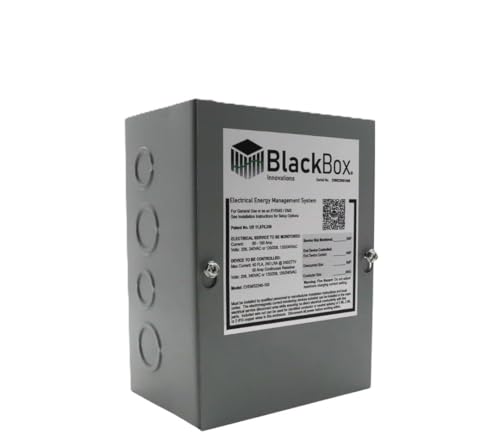
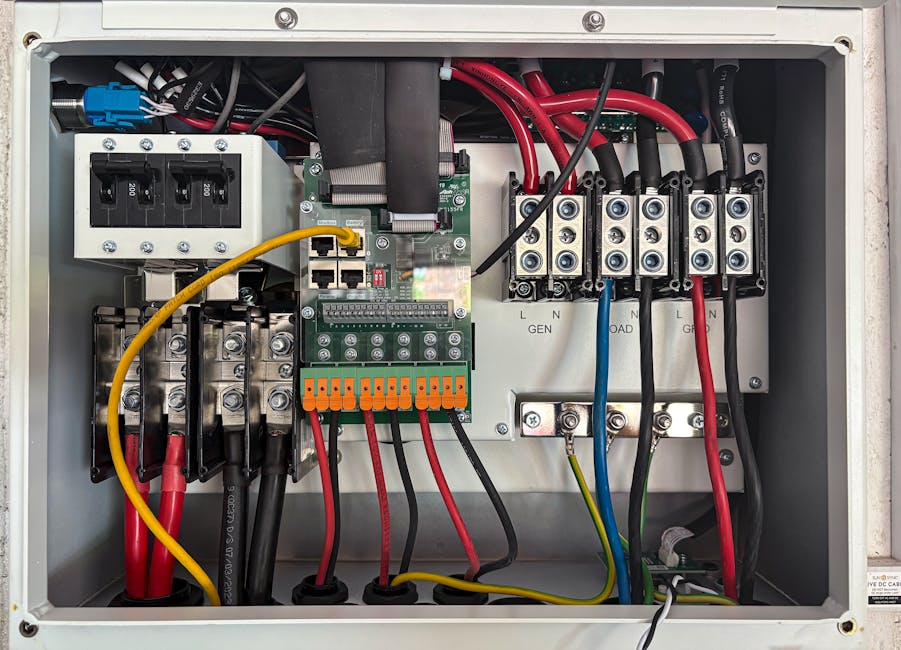
EV Charger BLACKBOX 240V 60-100A Service – No Electrical Panel or Service Upgrade Required. Allows 240 Volt up to 48 Amp (60Amp) EV Fast Charge Rate EV Load Management System Save $$
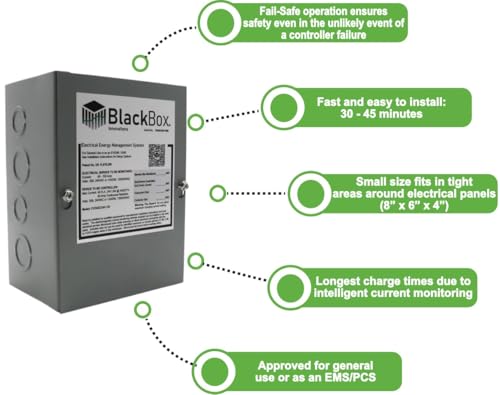
- VERSATILE CHARGING CAPABILITY: The EVEMS240-100 supports diverse EV charge rates including 16 Amp (3.8 KW), 20/24 Amp (4.8/5.7KW), 30/32 Amp (7.2/7.68 KW), 40 Amp (9.6 KW), and 48 Amp (11.5 KW), making it adaptable for various electric vehicles and other compatible devices. The compact size (8”x 6”x 4”) allows for easy installation near an electrical panel. The patented intelligent computer algorithm allows for extended “on” times. EV CHARGER SOLD SEPARATELY.Works with any Brand of EV Charger.
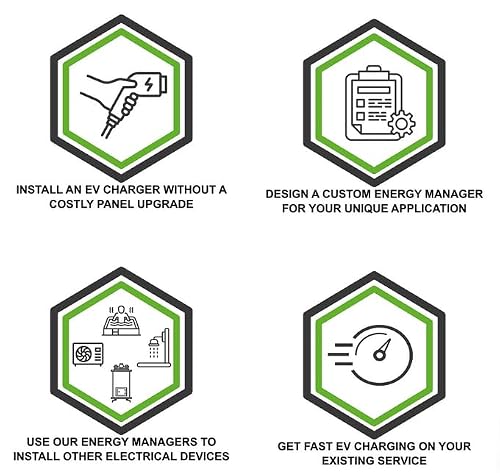
- ECONOMICAL 240V CHARGING SOLUTION BLACKBOX: With the EVEMS240-100, there's no need for an expensive upgrade to your electrical panel. This device saves you significant costs while still allowing fast charging and a fully charged EV battery every morning. EV CHARGER SOLD SEPARATELY
- INTELLIGENT ENERGY MANAGEMENT: Designed for service sizes from 60A to 100A, this device allows your EV to charge when electrical capacity permits, and automatically halts charging during capacity shortages, ensuring safe and efficient energy usage. Protects against EV charger premature failure by elimating power cycling.
- WORKS WITH ANY EV CHARGER OR 240 V PLUG . Works with any auto brand. Installation by a QUALIFIED ELECTRICIAN is highly recommended.
- NIGHT-TIME CHARGING EFFICIENCY: Capitalize on low electricity use during the night. This Blackbox permits uninterrupted EV charging overnight, reducing range anxiety, and often allows for daytime charging as well. EV CHARGER SOLD SEPARATELY
- EASY AND QUICK INSTALLATION: Installation is streamlined and efficient, typically completed within 30-45 minutes by QUALIFIED ELECTRICIAN. The unit uses simple current monitoring devices that clip onto the main line without any need to disconnect power. Single circuit load sharing function capability.
- FAIL-SAFE APPROVED: An important consideration; other devices use latching relays that can leave the controlled device in a “powered state” indefinitely if there is a failure at any point in your electrical system. This presents a serious safety concern. In contrast, our energy managers use a Fail-Safe device and prevents this safety & fire hazard. Preferred device by many insurance and electrical inspection authorites. SAE compliant.
- PATENTED EV ENERGY MANAGEMENT DEVICES: This will allow an electrician to exclude the Electric Vehicle charging portion of the residential electrical load calculation found in your US and Canadian (NEC and CEC) codebook. You will need a QUALIFIED ELECTRICIAN to legally do this calculation.
- BLACKBOX ends the need for homeowners who wanted to install an EV Charger to spend thousands of dollars to upgrade their Electrical Service or Electrical Panel. This Patented Energy Management Device will eliminate these costly Upgrades. Easy to Install. Also approved for General Use loads. AC, Hot Tubs, Heat Pumps and more!!!



As an Amazon Associate we earn from qualifying purchases. Product prices and availability are accurate as of the date/time indicated.
What Are the Main Reasons You Might Not Need a Panel Upgrade?
Your electrical panel upgrade may be completely unnecessary if you understand how EV charging actually impacts your home’s electrical demand. Most residential panels installed after 1990 have sufficient capacity for EV charging when managed intelligently. A standard 200-amp service panel can theoretically support a 40-amp Level 2 charger while maintaining safe operations for other household loads.
Understanding Your Current Electrical Capacity
The average American home uses 30-40 amps during peak consumption hours. A Level 2 EV charger draws 16-32 amps continuously while charging. However, these peak demands rarely occur simultaneously. Your electric oven might run for 30 minutes at dinner, your HVAC system cycles on and off throughout the day, and your EV charging happens primarily during off-peak hours. By analyzing your actual usage patterns through smart home monitoring, you can identify safe charging windows that don’t coincide with peak household demand. NEMA (National Electrical Manufacturers Association) standards confirm that most homes built in the last 30 years have adequate panel capacity when charging is scheduled strategically.
Why Electricians Often Recommend Upgrades
Electricians frequently recommend panel upgrades as a safety-first approach, not because they’re always necessary. Their liability concerns and conservative installation practices prioritize worst-case scenarios. A 200-amp panel technically has 160 amps available for circuits (keeping 40 amps in reserve per code). When an electrician sees your panel at 70-80% capacity with existing circuits, they recommend upgrading rather than calculating actual simultaneous demand. This is professional caution, not always technical necessity. Understanding load calculations and demand response can change this equation entirely.
How Can Smart Load Management Help You Skip the Upgrade?
Smart load management is the cornerstone strategy for avoiding panel upgrades in 2026. This involves using intelligent devices and scheduling to ensure your EV charger and high-demand appliances never run at maximum capacity simultaneously. Modern smart home technology makes this approach practical and automatic.
Implementing Time-of-Use Charging Schedules
Most electric utilities offer time-of-use (TOU) rates that charge less during off-peak hours—typically 9 PM to 6 AM. By programming your EV charger to activate only during these windows, you eliminate peak-hour conflicts entirely. Smart chargers with built-in scheduling features, available from most manufacturers in 2026, handle this automatically. You simply set your desired charge level and departure time, and the charger waits for the cheapest rate window. This strategy reduces your peak demand signature to near-zero during high-consumption hours. Many utilities, including Pacific Gas & Electric and regional providers nationwide, actively encourage this practice through rebates and lower rates. Combining TOU charging with home energy monitoring creates a complete demand-reduction system.
Using Demand Response Technology
Demand response systems communicate between your EV charger, your home’s electrical panel, and your utility company. When your home’s demand spikes—say, your air conditioning and electric water heater activate simultaneously—the system temporarily pauses EV charging until demand drops. This happens automatically without your intervention. Smart home hubs like those discussed in our complete smart home hub setup guide for 2026 can coordinate these systems. The charger resumes once safe conditions return, ensuring you still reach full charge overnight. This approach maintains electrical safety while eliminating the need for expensive panel upgrades. Devices with this capability cost $500-$1,500 installed, far less than a $3,000-$5,000 panel upgrade.
Circuit Prioritization and Load Shedding
Smart electrical panels and sub-panels can prioritize which circuits receive power during high-demand periods. Your EV charger can be set as a lower priority than essential circuits like your refrigerator, heating system, or medical equipment. During peak demand, the charger pauses while critical systems continue operating. This intelligent prioritization prevents overloads without requiring panel upgrades. Some 2026 smart home systems can shed loads from non-essential circuits—like pool pumps or hot tubs—temporarily during peak hours, freeing capacity for EV charging. This hybrid approach maximizes your existing panel’s capabilities while maintaining complete home functionality.
What Charger Options Work Best With Existing Panels?
Choosing the right charger is critical for avoiding panel upgrades. Level 1 chargers add minimal demand, while lower-amperage Level 2 chargers provide reasonable charging speeds without stressing your electrical system. Understanding these options helps you make decisions aligned with your existing infrastructure.
Level 1 Charging: The No-Upgrade Option
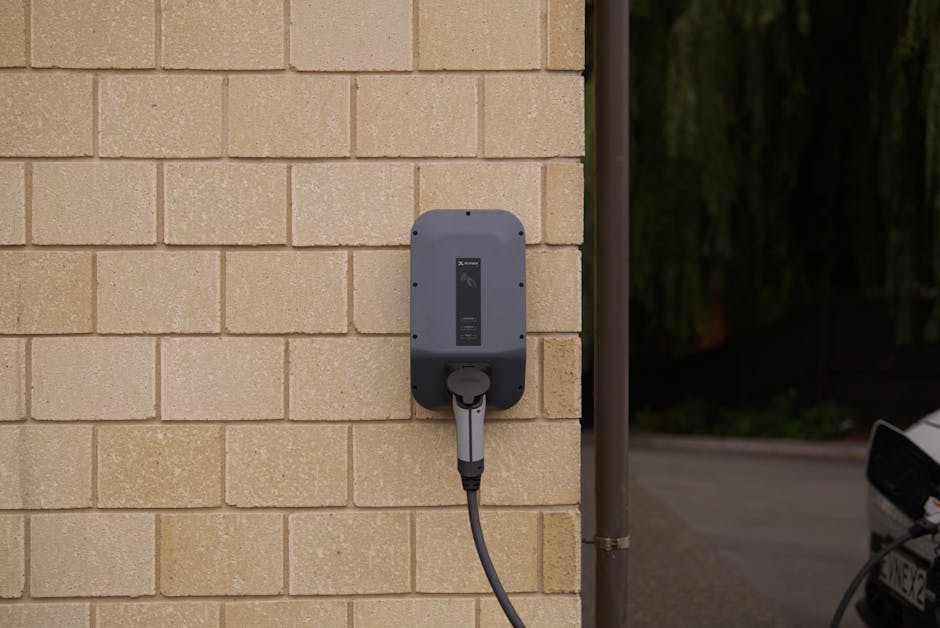
Level 1 chargers use standard 120-volt household outlets and draw only 12-16 amps. They add 2-5 miles of range per hour, making them ideal for homes with existing panels and minimal upgrade concerns. While slow, Level 1 charging is perfect if you drive less than 30 miles daily or have overnight charging available. These chargers cost $300-$600 and require no electrical work beyond a standard outlet. For apartment dwellers or those with limited daily driving, Level 1 completely eliminates panel upgrade needs. The U.S. EPA’s EV technology guide confirms Level 1 as a viable long-term solution for 40% of American households.
Lower-Amperage Level 2 Chargers (16-20 Amps)
Level 2 chargers operating at 16-20 amps (rather than the maximum 32 amps) provide 5-8 miles of range per hour while minimizing electrical panel stress. These chargers cost $400-$800 and can often be installed on existing 240-volt circuits originally intended for dryers or electric ranges. By choosing 20-amp operation instead of 32-amp, you reduce simultaneous demand impact by 40% compared to standard Level 2 installations. This modest charging speed suits most daily driving patterns while fitting comfortably within typical 200-amp residential service. Many 2026 chargers allow amperage adjustment via app, letting you optimize based on your home’s real-time demand.
Smart Chargers With Load Balancing
The latest 2026 smart chargers include built-in load balancing that monitors your home’s total electrical draw and automatically adjusts charging amperage to stay within safe limits. If your home suddenly draws 150 amps (HVAC plus water heater), the charger drops to 10 amps temporarily. As demand decreases, it gradually increases charging power. This technology, costing $800-$1,500 installed, essentially makes your existing panel behave like an upgraded one by optimizing real-time capacity. Combined with smart home monitoring systems, these chargers provide the safest path to EV ownership without panel upgrades.
How Do You Implement a Panel-Upgrade-Free EV Charging Strategy?
Creating a successful strategy involves assessment, planning, technology implementation, and coordination with your utility. This step-by-step approach ensures you can charge your EV safely within your existing electrical infrastructure while avoiding expensive upgrades.
Step 1: Assess Your Current Electrical Panel
Start by hiring a licensed electrician for a load calculation assessment (typically $150-$300). They’ll determine your panel’s actual available capacity using industry-standard calculations, not worst-case assumptions. Request they calculate simultaneous demand rather than simply adding all circuit capacities. Ask specifically: “Can this panel safely support a 20-amp Level 2 charger with smart load management?” Many panels that appear “full” actually have 30-50 amps of available capacity when calculated correctly. Get a written assessment documenting available capacity. This professional evaluation is your foundation for all subsequent decisions. Many electricians now offer this service specifically for EV owners seeking alternatives to upgrades.
Step 2: Monitor Your Home’s Actual Energy Usage
Install a smart home energy monitoring system to track your real consumption patterns for 2-4 weeks. Devices like those discussed in our guide to downloading home energy data in CSV format provide detailed usage breakdowns by circuit and appliance. Identify your peak consumption hours, which appliances draw the most power, and when you can safely charge without conflicts. Many smart home systems now integrate directly with EV chargers, automatically scheduling charging during identified low-demand windows. This data-driven approach replaces guesswork with actual numbers, showing you precisely whether your panel can handle EV charging. Most homeowners discover their peak demand is 40% lower than they assumed when measured accurately.
Step 3: Choose Your Charger and Installation Location
Based on your assessment and usage patterns, select an appropriate charger. If your panel has adequate capacity (40+ amps available), a 20-amp Level 2 charger is ideal. If capacity is tighter (20-40 amps), choose a smart 16-amp Level 2 or Level 1 charger. Select installation locations that minimize new circuit requirements. Installing near existing 240-volt circuits (dryer, range, water heater) allows using existing infrastructure. Installing in a garage near your main panel reduces wire runs and costs. Discuss these logistics with your electrician to identify the most efficient approach. Many homes can add EV charging by repurposing existing circuits during off-peak hours.
Step 4: Install Smart Home Integration
Set up your smart home hub to coordinate EV charging with household demand. Our complete 2026 smart home hub setup guide walks through this process. Connect your smart charger, home energy monitor, and utility account to create an integrated system. Program time-of-use charging schedules aligned with your utility’s off-peak rates. Enable demand response if your utility offers it. Configure alerts that notify you if simultaneous demand approaches unsafe levels. This automation ensures your EV charges safely and affordably without manual intervention or panel upgrades.
Step 5: Coordinate With Your Utility Company
Contact your utility to discuss EV charging and available incentive programs. Many utilities in 2026 offer rebates for smart chargers, demand response enrollment bonuses, and preferential TOU rates for EV owners. Some utilities provide free load calculations for EV customers. Discuss whether your area has managed charging programs that optimize grid stability while benefiting your wallet. Some utilities even provide free smart chargers to customers who agree to participate in demand response. This coordination often reduces your net costs while supporting grid reliability. Your utility’s EV program specialist can confirm whether panel upgrades are necessary in your specific situation.
What Are Common Mistakes That Force Unnecessary Panel Upgrades?
Understanding what NOT to do is equally important as knowing the right strategies. Many homeowners make decisions that eliminate panel-upgrade alternatives before exploring them.
Assuming You Need Maximum Charging Speed
The biggest mistake is insisting on 32-amp Level 2 charging (11 kW) when your driving patterns don’t require it. Most Americans drive less than 40 miles daily. A 20-amp Level 2 charger provides 30-35 miles of range overnight, completely covering typical usage. The desire for maximum speed pushes many owners toward panel upgrades unnecessarily. Realistic charging speed assessment—based on actual daily mileage, not theoretical maximum—often reveals that lower-amperage options suffice. Many 2026 EV owners find that 8-10 hours of Level 2 charging overnight meets all their needs without panel upgrades.
Installing Without Smart Load Management
Electricians who install chargers without implementing smart load management or demand response create unnecessary risk. A 32-amp charger installed on a 200-amp panel without smart controls is risky if other high-demand appliances run simultaneously. This forces electricians to recommend panel upgrades for safety. Conversely, the same 32-amp charger with smart load management and demand response operates safely. Always insist on smart charger installation with integrated load management, not just basic charging capability. The technology difference costs $200-$400 more but eliminates upgrade requirements entirely.
Failing to Use Existing 240-Volt Circuits
Many homes have unused 240-volt circuits originally installed for dryers, ranges, or hot tubs that have been removed. Electricians sometimes overlook these existing circuits and recommend new dedicated circuits, requiring panel upgrades. Always ask whether existing 240-volt circuits can be repurposed for EV charging during times when their original appliances aren’t operating. A circuit originally sized for a 40-amp dryer can be reduced to 20 amps for EV charging, reusing existing infrastructure. This oversight costs thousands in unnecessary upgrade expenses when simple circuit repurposing works perfectly.
Not Exploring Temporary or Portable Solutions
Some situations benefit from portable Level 2 chargers or temporary installations that avoid permanent panel modifications. If you’re in a rental property, considering moving, or want to test EV ownership before committing to infrastructure, portable 120/240-volt chargers ($400-$800) provide flexibility without panel work. These chargers plug into standard outlets and require no installation. While slower than hardwired options, they work perfectly for supplemental charging or temporary situations. Many homeowners who skip this option unnecessarily upgrade panels when portable alternatives would serve their needs.
Recommended Products

EV Charger BLACKBOX 240V 125A to 200A Service– No Electrical Panel Upgrade or Service Upgrade Required. Allows 240 Volt UP to 48 Amp (60A) EV Fast Charge Rate EV Load Management Save $$$
- Versatile Charging Capability: The EVEMS240-200 (for 125A -200A Services) supports diverse EV charge rates including 20/24 Amp (4.8/5.7KW), 30/32 Amp (7.2/7.68 KW), 40 Amp (9.6 KW), and 48 Amp (11.5 KW), making it adaptable for various electric vehicles and other compatible devices. The compact size (8”x 6”x 4”) allows for easy installation near an electrical panel. The intelligent computer algorithm allows for extended “on” times. EV CHARGER SOLD SEPARATELY. Works with any Brand of EV Charger.
- Intelligent Energy Management: Designed for service sizes from 60A to 100A, this device allows your EV to charge when electrical capacity permits, and automatically halts charging during capacity shortages, ensuring safe and efficient energy usage. EV CHARGER SOLD SEPARATELY
- Economical 240V Charging Solution BlackBox: With the EVEMS240-200, there's no need for an expensive upgrade to your electrical panel. This device saves you significant costs while still allowing fast charging and a fully charged EV battery every morning. EV CHARGER SOLD SEPARATELY
- Works With Any EV Charger or 240 V Plug . Works with Any Auto Brand. QUALIFIED ELECTRICIAN HIGHLY RECOMMENDED
- Night-Time Charging Efficiency: Capitalize on low electricity use during the night. This Blackbox permits uninterrupted EV charging overnight, reducing range anxiety, and often allows for daytime charging as well.
- Easy and Quick Installation: Installation is streamlined and efficient, typically completed within 30-45 minutes by a QUALIFIED ELECTRICIAN (HIGHLY RECOMMENDED) . The unit uses simple current monitoring devices that clip onto the main line without any need to disconnect power.
- Installing our Patented EV Energy Management devices will allow an electrician to exclude the Electric Vehicle charging portion of the residential electrical load calculation found in your US and Canadian (NEC and CEC) codebook. If you do not add additional calculated electrical load, then there is no need to upgrade an electrical service or panel. EV CHARGER SOLD SEPARATELY
- Fail-Safe Approved is an important consideration; many devices use relays that can leave the controlled device in a “powered state” indefinitely if the controller fails. This presents a serious safety concern. In contrast, our energy managers use a Fail-Safe device and prevents this safety hazard.
- BlackBox ends the need for homeowners who wanted to install an EV Charger to spend thousands of dollars to upgrade their Electrical Service or Electrical Panel. This Patented Energy Management Device will eliminate these costly Upgrades. Easy to Install. Also approved for General Use loads. AC, Hot Tubs, Heat Pumps and more!!!




As an Amazon Associate we earn from qualifying purchases. Product prices and availability are accurate as of the date/time indicated.

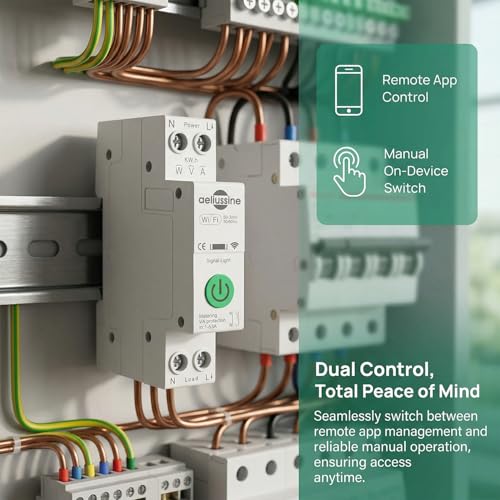
Aeliussine Smart Switch, 1-63A Adjustable WiFi Breaker(4 PCS)
- Precise & Adjustable Protection:This smart switch is capable of handling an electrical load current of 63A. making it compatible with various appliances. Customize over-current, over-voltage, and over-power alarm thresholds. Receive instant APP alerts and enable automatic power shutoff upon detecting anomalies, providing ultimate safety for your home's electrical circuits.
- Precise & Adjustable Protection:This smart switch is capable of handling an electrical load current of 63A. making it compatible with various appliances. Customize over-current, over-voltage, and over-power alarm thresholds. Receive instant APP alerts and enable automatic power shutoff upon detecting anomalies, providing ultimate safety for your home's electrical circuits.
- Detailed Energy Consumption Reports: Track and analyze electricity usage down to the hour, day, month, and year with clear, visual charts. Understand your energy spending patterns, pinpoint high-consumption devices, and make informed decisions to significantly reduce your electricity bills.
- Advanced Scheduling & Automation: Automate your appliances with flexible Timer, Countdown, Cycle (repeating daily/weekly), and even Sunrise/Sunset automation modes. Program devices to operate only when needed, eliminating unnecessary energy use
- Seamless Remote Control: Control your connected home appliances from anywhere in the world using the "Smart Life" app, the connected universal switch helps you avoid forgetting to turn off appliances.



As an Amazon Associate we earn from qualifying purchases. Product prices and availability are accurate as of the date/time indicated.
Frequently Asked Questions
Can a 100-amp electrical panel support EV charging?
A 100-amp panel is marginal for EV charging and typically requires upgrades or strict load management. With Level 1 charging only (12-16 amps) and careful scheduling, it’s possible. However, most electricians recommend upgrading to 150 or 200 amps for EV compatibility. Consult a licensed electrician for your specific situation and usage patterns before deciding.
How much does a smart EV charger with load management cost?
Smart EV chargers with integrated load management range from $600-$1,500 for the device itself, plus $300-$800 for installation. This is significantly cheaper than panel upgrades costing $3,000-$5,000. Many utilities offer rebates reducing net costs by $200-$500, making smart chargers very affordable compared to alternatives.
Will my utility company help with panel upgrade costs?
Some utilities offer rebates or cost-sharing for panel upgrades, typically $500-$2,000. However, most incentives prioritize smart chargers and demand response enrollment instead. Contact your utility’s EV program to learn available incentives. Many utilities encourage avoiding upgrades through smart technology rather than subsidizing them.
How long does EV charging take with a 16-amp Level 2 charger?
A 16-amp Level 2 charger provides approximately 20-25 miles of range per hour, or 160-200 miles overnight with 8-10 hours of charging. This suits most daily driving patterns perfectly. For comparison, 20-amp chargers provide 25-30 miles per hour, while 32-amp chargers provide 30-35 miles per hour. Most drivers find 16-20 amps sufficient without panel upgrades.
Can demand response programs really prevent panel upgrades?
Yes, demand response programs are highly effective for avoiding upgrades. By temporarily pausing EV charging during peak household demand periods, they keep total electrical draw within safe limits. Combined with time-of-use charging scheduling, demand response enables safe EV charging on existing panels. Participation is typically free or incentivized by utilities.
What’s the difference between load calculation and panel amperage?
Panel amperage (100, 150, or 200 amps) is the service size. Load calculation determines how much of that capacity is actually available for new circuits. A 200-amp panel might have only 40 amps available after existing circuits are accounted for, or it might have 80 amps available depending on actual usage patterns. Proper load calculations reveal true capacity, not assumptions.
Is Avoiding an Electrical Panel Upgrade for EV Charging Worth the Effort in 2026?
Absolutely. Avoiding a panel upgrade saves $3,000-$5,000 while achieving your EV charging goals through smarter, more efficient methods. The combination of smart chargers, load management technology, and utility coordination has advanced dramatically by 2026. Most homeowners with 200-amp panels installed in the last 30 years can successfully charge electric vehicles without upgrades when they implement these strategies properly.
The effort involved is minimal compared to savings. A professional load assessment ($150-$300), smart charger installation ($800-$1,500 total), and smart home integration ($200-$500) total roughly $1,250-$2,300—a fraction of panel upgrade costs. Additionally, smart charging reduces your electricity bills through time-of-use rates and demand response incentives, recovering your investment within 2-3 years. Your home’s electrical infrastructure becomes more efficient, not just for EV charging but for all operations.
The environmental and practical benefits extend beyond cost savings. Smart load management reduces grid strain during peak hours, supporting renewable energy integration and grid stability. Your home becomes part of the solution for sustainable energy distribution. From a practical standpoint, smart charging ensures your EV always charges at the cheapest rates and during optimal times, maximizing convenience.
If you’re building a comprehensive smart home in 2026, EV charging integration fits naturally into your broader automation strategy. Explore our guides on building a smart home step by step and starting a smart home on a small budget to see how EV charging fits into your overall home automation plan. The technology ecosystem supporting panel-upgrade-free EV charging has matured to the point where it’s now the preferred approach for most homeowners. Invest in assessment and smart technology rather than expensive infrastructure upgrades, and you’ll enjoy reliable, affordable EV charging while future-proofing your home.



Write Your Review
No reviews yet. Be the first to share your experience!