

What Are the Key Differences Between Emporia Vue and Sense in 2026?
Emporia Vue and Sense are the two dominant whole-home energy monitoring systems available in April 2026, each offering distinct approaches to tracking electricity consumption. Emporia Vue uses circuit-level monitoring through individual current transformer clamps on your breaker panel, providing granular data on specific circuits and appliances. Sense employs artificial intelligence and machine learning to identify individual appliances without requiring panel installation, using a non-invasive clamp-on meter. The key difference lies in installation complexity versus monitoring depth: Vue demands professional or DIY electrical work but delivers precise circuit data, while Sense offers plug-and-play simplicity with AI-powered appliance detection. For homeowners seeking detailed energy insights, Vue excels; for those prioritizing ease of installation, Sense wins. Both systems integrate with smart home platforms and provide real-time energy dashboards, though their data granularity and accuracy differ significantly. Pricing in 2026 reflects this divide, with Vue offering more affordable entry points but requiring installation costs, while Sense commands a premium for its AI technology and simpler setup process.
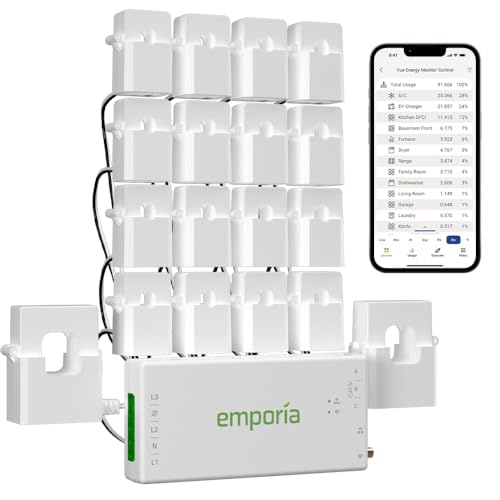
Emporia Vue 3 Home Energy Monitor with 16 Circuit Sensors
- SAFETY YOU CAN TRUST WITH UL CERTIFICATION: With Emporia Energy, your home energy monitoring is safe, reliable, and certified. The Emporia Vue is UL Listed, meaning it has met rigorous safety standards for electrical products in the U.S. and Canada. This certification ensures that every component has been thoroughly tested to prevent hazards, such as overheating, short-circuiting, or fire, offering you peace of mind as you manage your home’s energy consumption.
- INSTALLS IN CIRCUIT PANEL of most homes with clamp-on sensors. Supports Single phase, Single-split phase, and 2-wire systems. 3-wire systems; 3-phase, 4-wire Wye systems with earthed (TN or TT) neutral (no-Delta) are supported with an additional 200A sensor (sold separately).
- 24/7 ENERGY MANAGEMENT AND MONITORING: Automate, manage and control your home's real power anywhere, anytime to prevent costly repairs, conserve energy, and save costs. Monitor solar / net metering. PROTECTED BY A 1-YEAR WARRANTY.
- LOWER YOUR ELECTRIC BILL: Configure settings in the Emporia Energy App to automate energy management for time of use, peak demand, excess solar, and rewards programs. You can even see live reporting and invaluable savings opportunities instantly. Gauge real-time spending and get actionable notifications and automated energy management to help you reduce costs.
- REAL-TIME ENERGY DATA: REQUIRES 2.4 GHz WIFI WITH AN INTERNET CONNECTION to monitor energy use with iPhone / Android / Web app. Vue sensors collect energy data and are accurate from ±2%. The Vue is UL and CE Listed for your safety. 1 second data is only available in the app (when actively open) and retained 3 hours. Minute and hour data are retained in the cloud. 1 minute data is retained 7 days, 1 hour data is retained indefinitely. Export cloud data whenever you want in the app.
- APPLIANCE MONITORING WITHOUT GUESSWORK: Comes with sixteen branch (50A) sensors to accurately monitor your critical loads like air conditioner, furnace, water heater, washer, dryer, range, etc. New and improved screw terminals / ports allow CT wires to be trimmed to reduce panel clutter.


As an Amazon Associate we earn from qualifying purchases. Product prices and availability are accurate as of the date/time indicated.

How Does Emporia Vue’s Circuit-Level Monitoring Work?
Emporia Vue’s architecture centers on circuit-level monitoring, making it the gold standard for homeowners who want comprehensive energy visibility. The system uses individual current transformer (CT) clamps that attach directly to breaker wires in your electrical panel. Each clamp measures the amperage flowing through a specific circuit, and the Vue hub calculates real-time power consumption by multiplying that amperage by your home’s voltage. This approach provides several advantages: you can identify exactly which circuits consume the most energy, monitor individual appliances on dedicated circuits, and detect electrical problems like imbalanced loads or phantom power draw.
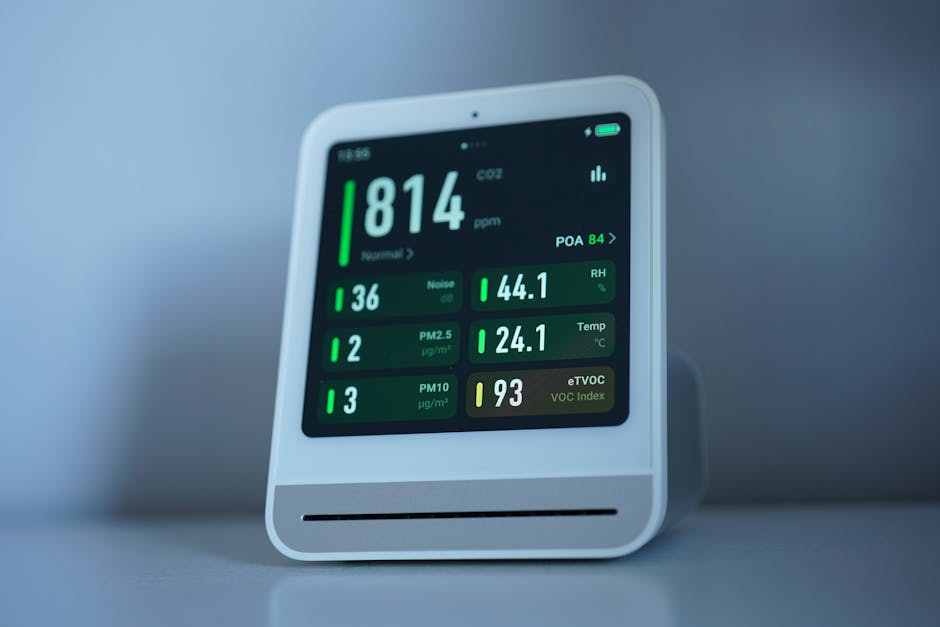
The Emporia Vue 3, the flagship model in 2026, supports up to 16 sub-metering clamps, allowing you to monitor everything from your HVAC system to individual bedroom outlets. Installation requires accessing your electrical panel—a task that demands caution and ideally professional assistance. Once installed, the Vue app displays real-time power consumption, historical trends, and cost projections. The system integrates with circuit-level installation guides that walk users through proper CT clamp placement and polarity configuration. Vue’s strength lies in its ability to detect phantom loads and energy vampires by monitoring standby power consumption on specific circuits.
How Does Sense Use Artificial Intelligence for Appliance Detection?
Sense takes a fundamentally different approach by leveraging machine learning algorithms to identify individual appliances without requiring panel access. The system installs a single meter at your electrical service entrance or directly on your main breaker, capturing aggregate household electricity data. Sense’s AI engine analyzes electrical signatures—unique patterns of voltage, current, and frequency that each appliance generates—to identify what’s running and when. Over time, the system learns your household’s consumption patterns and becomes increasingly accurate at distinguishing between devices.
The Sense Home Energy Monitor in 2026 offers real-time whole-home consumption tracking, individual appliance detection (with support for hundreds of device types), and detailed energy reports. Its advantage is obvious: no electrical panel access required, making it accessible to renters and those uncomfortable with electrical work. However, Sense’s accuracy depends on your appliance mix and how distinct their electrical signatures are. Common appliances like refrigerators, water heaters, and HVAC systems are reliably detected, but smaller devices or appliances with similar signatures may be misidentified. Sense integrates with smart home ecosystems and provides detailed insights into consumption patterns, helping users identify opportunities for energy conservation. The system’s machine learning improves continuously, with Sense releasing regular updates that enhance detection accuracy.
How Do Installation Requirements Compare Between Vue and Sense?
Installation complexity represents one of the most significant differentiators between these two systems. Emporia Vue requires accessing your electrical panel and installing CT clamps on individual breaker wires—a task that many homeowners cannot safely perform themselves. The process involves turning off the main breaker, carefully placing clamps around specific wires without touching live conductors, and ensuring correct polarity to avoid negative readings. Many installers recommend hiring a licensed electrician, which adds $500–$1,500 to the system cost. However, Vue’s installation is a one-time event; once complete, the system operates indefinitely with minimal maintenance.

Sense’s installation is dramatically simpler. The meter mounts directly onto your main breaker or service entrance using a provided clamp, requiring no electrical connections or panel access. Most users complete installation in under 30 minutes, connecting the device to Wi-Fi and launching the mobile app. This simplicity makes Sense ideal for renters, apartment dwellers, and anyone uncomfortable with electrical work. However, Sense’s placement options may be limited if your service entrance is in an inconvenient location or if your utility company restricts meter placement. For users seeking plug-and-play convenience, Sense is the clear winner; for those willing to invest in proper installation, Vue provides superior long-term value through its detailed circuit-level insights.
How Accurate Are Emporia Vue and Sense Energy Measurements?
Accuracy is critical when evaluating energy monitoring systems, as measurement errors can lead to incorrect cost projections and flawed energy-saving decisions. Emporia Vue’s circuit-level monitoring achieves accuracy rates of 95–99% for individual circuits, depending on CT clamp calibration and proper installation. Vue’s accuracy advantage stems from direct measurement: the CT clamps physically measure current flow, eliminating algorithmic uncertainty. However, Vue’s accuracy depends on correct clamp polarity; improper polarity configuration can produce negative readings and skew data. Once properly configured, Vue provides reliable, consistent measurements across all monitored circuits.

Sense’s accuracy varies more widely, typically ranging from 85–95% for whole-home consumption and 60–85% for individual appliance detection. The system’s AI improves over time, but initial accuracy depends on your appliance diversity and how distinct their electrical signatures are. Sense is exceptionally accurate for large, constant-load devices like refrigerators and water heaters but may struggle with variable-load appliances or devices with similar signatures. For identifying individual appliance signatures, Vue’s circuit-level approach provides superior accuracy if you’ve dedicated circuits to specific devices. If your goal is understanding whole-home consumption and general appliance categories, Sense’s accuracy is sufficient; if you need precise circuit-level data, Vue is the more reliable choice.
What Are the Pricing and Long-Term Value Considerations?
Pricing in April 2026 reflects both systems’ distinct value propositions. Emporia Vue’s hardware costs $150–$300 depending on the model, making it significantly cheaper than Sense’s $300–$400 price tag. However, Vue’s true cost includes professional installation, which can add $500–$1,500. Total installed cost for Vue typically ranges from $650–$1,800. Sense’s all-in cost is $300–$400, with no installation expenses, making it attractive for budget-conscious consumers and renters.
Long-term value depends on your energy-saving goals and household characteristics. Vue’s circuit-level monitoring enables precise identification of energy waste, potentially saving $500–$2,000 annually for households with significant phantom loads or inefficient appliances. For homeowners planning to stay in their homes for 5+ years, Vue’s upfront investment pays dividends through sustained energy optimization. Sense provides solid whole-home monitoring and can identify major consumption patterns, but its appliance detection limitations may prevent discovering smaller inefficiencies. For renters, apartment dwellers, or those with limited budgets, Sense offers better immediate value. For homeowners seeking maximum energy insights and long-term savings, Vue’s higher upfront investment typically yields better returns.
How Do Vue and Sense Integrate with Smart Home Ecosystems?
Both systems offer robust smart home integration, though their approaches differ. Emporia Vue connects to major platforms including Apple HomeKit, Google Home, Amazon Alexa, and Home Assistant. In 2026, Vue has expanded its integrations to support Matter Protocol, enabling compatibility with emerging smart home standards. This flexibility makes Vue an excellent choice for users with diverse smart home setups who want energy data accessible across multiple platforms. Vue’s API also supports custom integrations, allowing advanced users to download energy data in CSV format for analysis.
Sense similarly integrates with major platforms but with slightly narrower compatibility. Sense supports Google Home, Amazon Alexa, and Home Assistant, with ongoing development for additional integrations. Sense’s strength lies in its native app experience, which provides superior visualization and detailed energy reports. For users building comprehensive smart homes with step-by-step smart home strategies, both systems offer adequate integration. Vue’s broader platform support gives it a slight edge for users with heterogeneous smart home ecosystems, while Sense’s app experience appeals to users who prefer a single, unified interface.
What Common Mistakes Should You Avoid When Choosing Between Vue and Sense?
Several mistakes can lead to poor system selection and buyer regret. First, underestimating installation complexity with Vue is common—many DIYers encounter unexpected electrical panel configurations, discover they lack proper circuit access, or realize they’re uncomfortable working with live electrical systems. Hiring a professional electrician from the outset prevents costly mistakes and safety hazards. Second, overestimating Sense’s appliance detection accuracy is a frequent error. Users expecting the system to identify every device often become frustrated when smaller appliances remain undetected or misidentified. Sense excels at whole-home consumption tracking; expecting granular appliance-level accuracy leads to disappointment.
Third, failing to consider your long-term home plans affects the decision. Renters and those planning to move within 2–3 years should choose Sense for portability; homeowners planning to stay 5+ years benefit from Vue’s superior insights. Fourth, ignoring your electrical panel’s accessibility is a critical oversight. If your panel is in a locked utility closet, attic, or otherwise inaccessible location, Vue installation becomes significantly more expensive or impossible. Fifth, neglecting to verify utility company policies can create problems; some utilities restrict meter placement or require professional installation. Finally, choosing based solely on price without considering long-term energy savings potential misses Vue’s true value proposition. Evaluate both systems based on your specific needs, home characteristics, and energy-saving goals rather than defaulting to the cheapest option.
How Do You Choose the Right Energy Monitor for Your Specific Situation?
Selecting between Emporia Vue and Sense requires honest assessment of your priorities, technical comfort, and home characteristics. Start by identifying your primary goal: if you want to understand whole-home consumption and general appliance categories, Sense’s AI-powered detection suffices. If you need precise circuit-level data to optimize energy usage, identify phantom loads, or monitor specific appliances, Vue’s superior accuracy justifies its higher cost. Consider your installation capabilities and comfort level with electrical work. If accessing your electrical panel seems daunting or unsafe, Sense’s plug-and-play approach eliminates this barrier. If you’re comfortable with electrical work or willing to hire a professional, Vue’s detailed insights provide exceptional value.
Evaluate your home’s characteristics next. Homes with many dedicated circuits (separate circuits for HVAC, water heater, EV charger, etc.) benefit dramatically from Vue’s circuit-level monitoring. Homes with older electrical panels or limited circuit availability may struggle to justify Vue’s cost. Renters and apartment dwellers should default to Sense, which requires no permanent modifications and remains portable. Assess your long-term plans: homeowners staying 5+ years benefit from Vue’s upfront investment, while those planning to move should choose Sense’s portability. Review your current energy consumption patterns. If you suspect significant phantom loads or have high bills without obvious causes, Vue’s detection capabilities help identify problems. If you primarily want to track usage trends and reduce consumption, Sense provides adequate insights.
Finally, consider your smart home ecosystem. If you use multiple platforms (Apple HomeKit, Google Home, Alexa, Home Assistant), Vue’s broader integration support matters. If you prefer a single unified app experience, Sense’s native application excels. Budget constraints matter, but avoid choosing purely on price; calculate total cost of ownership including installation and factor in potential energy savings. For many homeowners, Vue’s circuit-level insights pay for themselves within 2–3 years through identified inefficiencies and optimization opportunities. For renters and those prioritizing simplicity, Sense’s accessibility and lower upfront cost make it the logical choice. Ultimately, the right system aligns with your specific situation rather than generic recommendations.
What Are the Best Practices for Maximizing Energy Monitor Effectiveness?
Regardless of which system you choose, several best practices maximize its effectiveness and ensure you extract maximum value from your investment. First, establish baseline energy consumption before making any changes. Record your current usage patterns, peak consumption times, and monthly costs. This baseline enables accurate measurement of savings achieved through subsequent optimizations. Second, identify your largest energy consumers. With Vue, examine circuit-level data to find the highest-draw devices; with Sense, review appliance detection reports to spot major consumers. Most households find that HVAC systems, water heaters, and refrigerators consume 50–70% of total energy, making these priority optimization targets.
Third, implement targeted efficiency improvements based on monitor data. For Vue users, winter energy-saving strategies might reveal excessive heating consumption, prompting thermostat adjustments or insulation improvements. For Sense users, appliance detection reports guide decisions about replacing aging, inefficient devices. Fourth, monitor phantom loads and standby consumption. Vue’s circuit-level monitoring excels at detecting phantom loads and energy vampires that drain power 24/7. Identifying and eliminating these loads often yields quick savings without lifestyle changes.
Fifth, leverage integration capabilities to automate energy optimization. Both systems integrate with smart home platforms, enabling automated responses to consumption patterns. For example, you might schedule water heater operation during off-peak hours or automatically adjust HVAC setpoints based on occupancy. Sixth, review detailed reports regularly—weekly for Vue, monthly for Sense—to identify trends and anomalies. A sudden consumption spike might indicate a failing appliance or unexpected usage pattern worth investigating. Seventh, share data with household members to encourage energy-conscious behavior. When everyone understands consumption patterns and sees the impact of their actions, household-wide efficiency improves dramatically. Finally, if you own an EV, integrate your energy monitor with charging management. Circuit load management systems work seamlessly with both Vue and Sense to optimize charging times and prevent panel overload.
Recommended Products
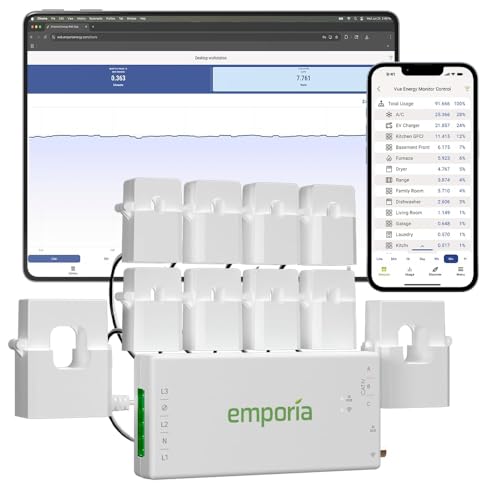
Emporia Vue 3 Real-Time Home Energy Monitor with Solar Support
- SAFETY YOU CAN TRUST WITH UL CERTIFICATION: With Emporia Energy, your home energy monitoring is safe, reliable, and certified. The Emporia Vue is UL Listed, meaning it has met rigorous safety standards for electrical products in the U.S. and Canada. This certification ensures that every component has been thoroughly tested to prevent hazards, such as overheating, short-circuiting, or fire, offering you peace of mind as you manage your home’s energy consumption.
- INSTALLS IN CIRCUIT PANEL of most homes with clamp-on sensors. Supports Single phase, Single-split phase, and 2-wire systems. 3-wire systems; 3-phase, 4-wire Wye systems with earthed (TN or TT) neutral (no-Delta) are supported with an additional 200A sensor (sold separately).
- 24/7 ENERGY MANAGEMENT AND MONITORING: Automate, manage and control your home's real power anywhere, anytime to prevent costly repairs, conserve energy, and save costs. Monitor solar / net metering. PROTECTED BY A 1-YEAR WARRANTY.
- LOWER YOUR ELECTRIC BILL: Configure settings in the Emporia Energy App to automate energy management for time of use, peak demand, excess solar, and rewards programs. You can even see live reporting and invaluable savings opportunities instantly. Gauge real-time spending and get actionable notifications and automated energy management to help you reduce costs.
- REAL-TIME ENERGY DATA: REQUIRES 2.4 GHz WIFI WITH AN INTERNET CONNECTION to monitor energy use with iPhone / Android / Web app. Vue sensors collect energy data and are accurate from ±2%. The Vue is UL and CE Listed for your safety. 1 second data is only available in the app (when actively open) and retained 3 hours. Minute and hour data are retained in the cloud. 1 minute data is retained 7 days, 1 hour data is retained indefinitely. Export cloud data whenever you want in the app.

As an Amazon Associate we earn from qualifying purchases. Product prices and availability are accurate as of the date/time indicated.
Frequently Asked Questions
What is the main difference between Emporia Vue and Sense in 2026?
Emporia Vue uses circuit-level monitoring with individual CT clamps on your breaker panel, providing precise data on specific circuits and appliances. Sense employs AI-powered appliance detection without panel access, identifying devices through electrical signature analysis. Vue offers superior accuracy and detail but requires installation; Sense prioritizes simplicity and accessibility. Choose Vue for detailed insights, Sense for plug-and-play convenience.
Can renters use either Emporia Vue or Sense?
Sense is ideal for renters since it requires no permanent modifications or panel access—simply clamp it onto your main breaker and connect to Wi-Fi. Emporia Vue typically isn’t suitable for renters because it requires modifying your electrical panel, which landlords rarely permit. Sense’s portability makes it the clear choice for temporary housing situations.
How much money can you save using Emporia Vue or Sense?
Potential savings vary widely based on your current consumption patterns and efficiency. Vue users typically identify $500–$2,000 in annual savings through phantom load elimination and appliance optimization. Sense users save $200–$800 annually through consumption awareness and behavioral changes. Actual savings depend on your baseline consumption, local electricity rates, and commitment to implementing efficiency improvements discovered through monitoring.
Does Emporia Vue work with Apple HomeKit and Google Home?
Yes, Emporia Vue integrates with both Apple HomeKit and Google Home, plus Amazon Alexa and Home Assistant. In 2026, Vue also supports Matter Protocol for enhanced compatibility with emerging smart home standards. Sense supports Google Home, Amazon Alexa, and Home Assistant, with slightly narrower platform coverage than Vue.
Which system is more accurate for measuring electricity consumption?
Emporia Vue achieves 95–99% accuracy for circuit-level measurements through direct current measurement. Sense provides 85–95% accuracy for whole-home consumption but only 60–85% accuracy for individual appliance detection. Vue’s circuit-level approach is more accurate; Sense’s accuracy improves over time through machine learning but depends on appliance diversity.
Can you monitor EV charging with these systems?
Both systems can monitor EV charging consumption. Vue excels at this task when your charger is on a dedicated circuit, providing precise charging data. Sense can identify EV charging as a whole-home load but may struggle to isolate it from other appliances. For detailed EV charging management, circuit load management systems work best with Vue’s circuit-level monitoring.
Is Emporia Vue or Sense the Better Choice for Your Home in 2026?
Choosing between Emporia Vue and Sense ultimately depends on your specific circumstances, priorities, and home characteristics rather than a one-size-fits-all recommendation. For homeowners seeking maximum energy visibility, precise circuit-level monitoring, and the ability to identify phantom loads and individual appliance consumption, Emporia Vue represents the superior long-term investment. Its upfront costs—both hardware and professional installation—are offset by the detailed insights that enable significant energy savings and efficiency optimizations. Vue’s circuit-level approach provides accuracy and reliability that AI-powered systems cannot match, making it the logical choice for users planning to stay in their homes for 5+ years and those with dedicated circuits for major appliances like HVAC systems, water heaters, and EV chargers.
For renters, apartment dwellers, budget-conscious consumers, and those prioritizing ease of installation, Sense offers exceptional value through its plug-and-play setup and AI-powered appliance detection. The system requires no electrical panel access, no professional installation, and no permanent modifications to your home. Sense’s machine learning capabilities continuously improve detection accuracy, and its native app provides an excellent user experience for tracking consumption trends and identifying major energy consumers. For users primarily interested in understanding whole-home consumption patterns and making general efficiency improvements, Sense’s capabilities are entirely adequate and its lower upfront cost makes it accessible to more households.
Consider your specific situation: Are you a homeowner planning to stay 5+ years with accessible electrical panel? Choose Vue for maximum insights and long-term savings. Are you a renter or apartment dweller? Choose Sense for portability and simplicity. Do you want precise data on specific circuits and appliances? Choose Vue. Do you prefer a simple, unified app experience? Choose Sense. In April 2026, both systems represent solid investments in home energy management. Vue appeals to optimization-focused homeowners willing to invest in detailed monitoring, while Sense serves accessibility-conscious users and those seeking straightforward consumption tracking. Evaluate your priorities honestly, assess your home characteristics realistically, and select the system that aligns with your specific needs rather than generic recommendations.







Write Your Review
No reviews yet. Be the first to share your experience!